



Menu
Sustainable Architecture in Practice: 6 Inspiring Eco-Building Projects
Sustainable architecture has grown into an essential part of the design process. Architects are increasingly challenged to design buildings that are not only aesthetically pleasing and functional, but also contribute to a healthier living environment and a lower ecological impact.
Eco-building plays an important role in this. This design approach considers the entire life cycle of a building: from material extraction and design to use, maintenance, and future repurposing. By consciously choosing natural materials, energy-efficient strategies, and a strong relationship with the landscape, architecture emerges that is truly future-proof.
In this blog, we highlight six inspiring projects in which sustainable architecture, biobased materials, and natural integration with the environment take center stage.
What is the difference between eco-building and traditional construction?
Eco-building focuses on the entire life cycle of a building, from design to reuse. It uses sustainable, renewable materials and emphasizes energy efficiency, health, and minimal environmental impact. Traditional construction often takes these aspects less into account, which can result in a greater environmental impact and a building whose long-term value is less stable.
Is Shou Sugi Ban low-maintenance?
Yes, thanks to its charred surface, Shou Sugi Ban is naturally protected against moisture, insects, mold, and UV radiation. As a result, the wood has a long lifespan and periodic treatments are unnecessary, which helps keep maintenance costs low.
Which type of wood is used for eco-building with Shou Sugi Ban?
At Zwarthout | Shou Sugi Ban, we exclusively use FSC-certified wood from sustainably managed forests. The choice depends on the desired appearance, application, and technical building requirements. Each wood species is carefully selected for its quality and durability.
Read more here about suitable wood species for Shou Sugi Ban.
What applications is eco-building with Shou Sugi Ban suitable for?
Shou Sugi Ban is ideal for façade cladding and exterior walls. It is also used in landscape architecture, interior construction, and even furniture design. The technique offers both functional and aesthetic advantages.
1. Modern Biophilic Country House – Architecture that Enhances Well-Being
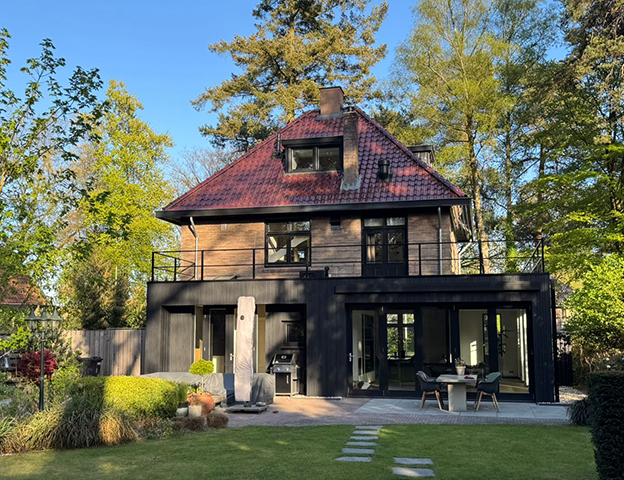
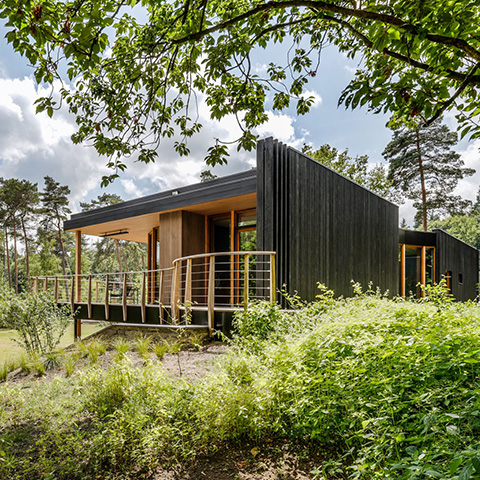
Biophilic design is playing an increasingly important role in sustainable architecture. This modern country house on the Utrechtse Heuvelrug was designed to create a strong connection between residents and nature.
Architect Steven van Leeuwen (ORGA architects) collaborated with landscape architect Nico Wissing on a design in which natural materials and organic forms take center stage.
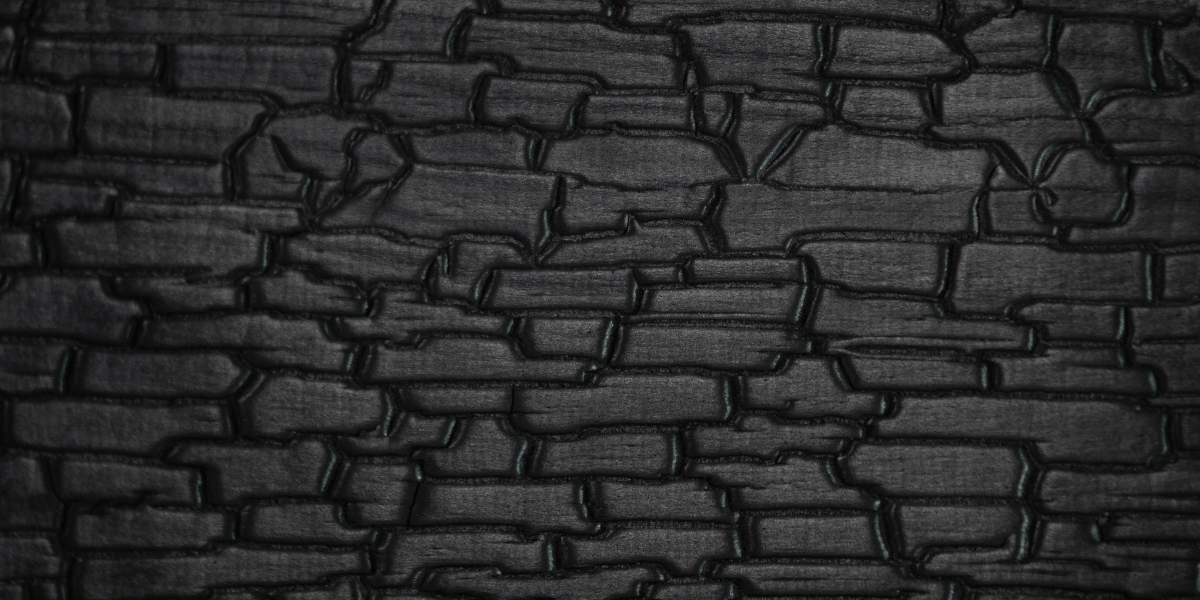
Wood plays an important role here. At the rear of the house, Marugame façade cladding was applied. Its refined scale-like texture and silvery sheen perfectly complement the Fraké wooden façades, terraces, and balustrades.
The result is a home that is not only sustainable but also promotes tranquility, well-being, and a sense of connection with nature.
- Architect:ORGA architect
- Landscape architect:Nico Wissing
- Constructor :Bouwbedrijf Van Engen
- Photograph:Robert Koelewijn Fotografie
2.Rural Property in Westbroek – Architecture in Dialogue with the Landscape
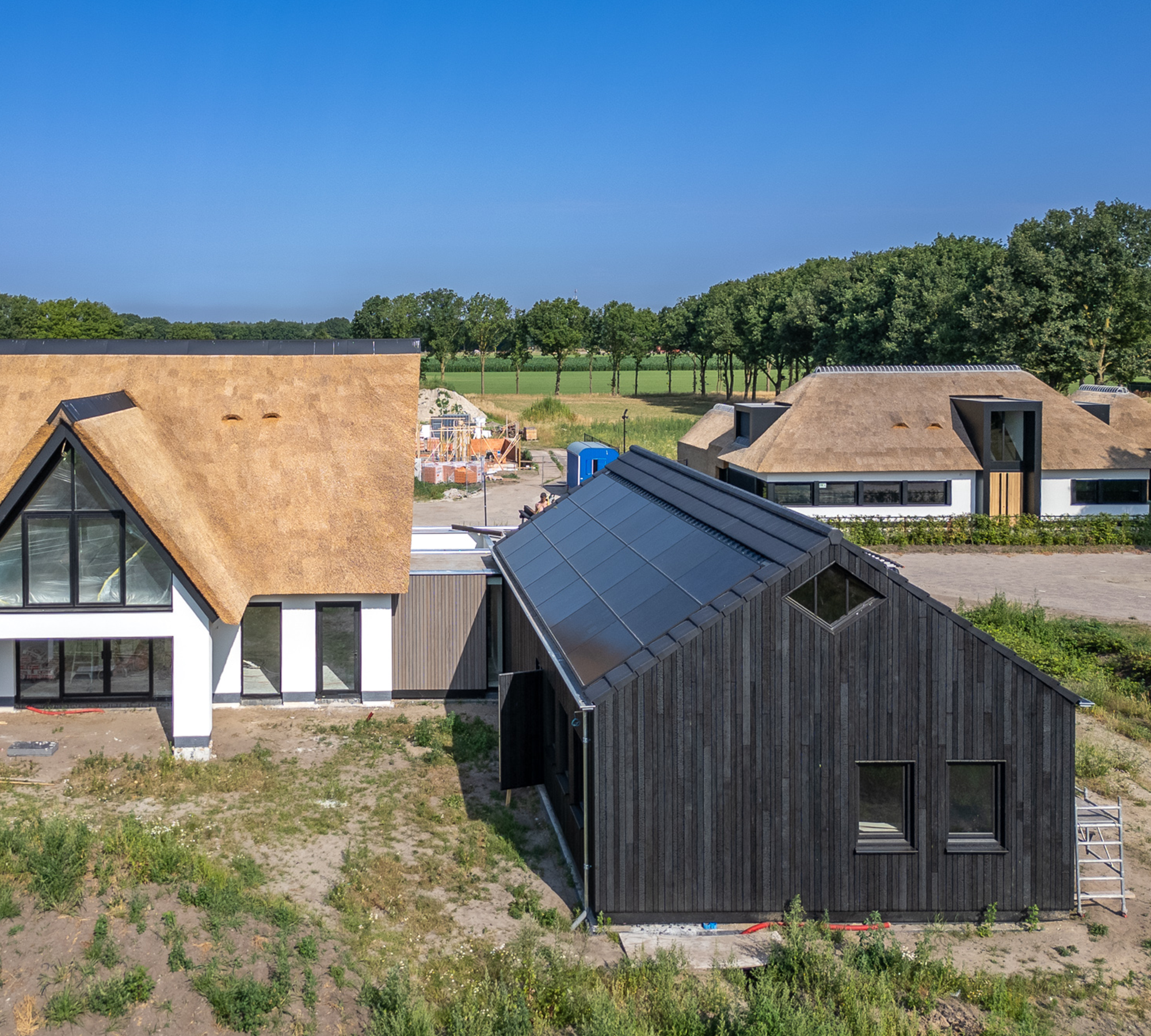
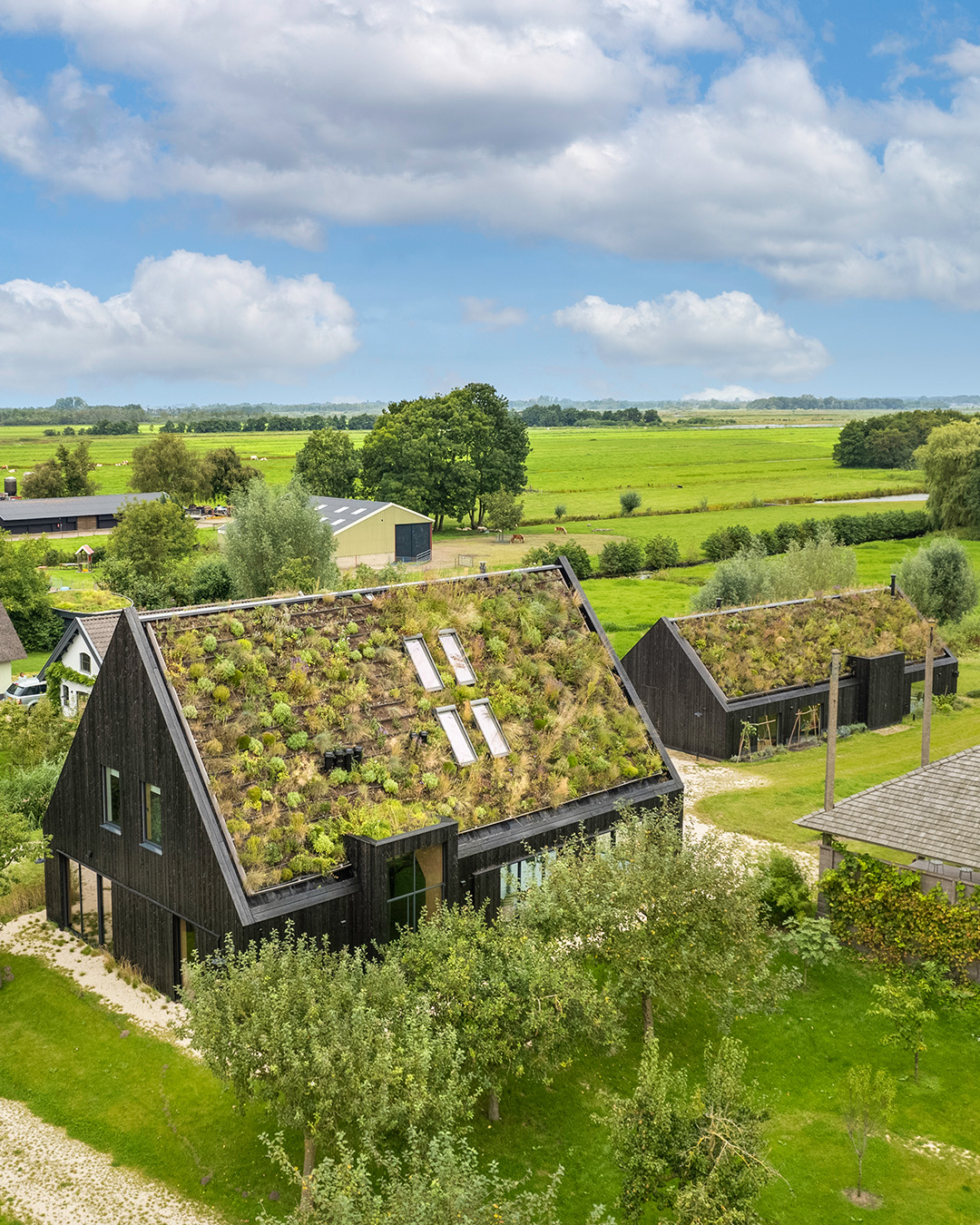
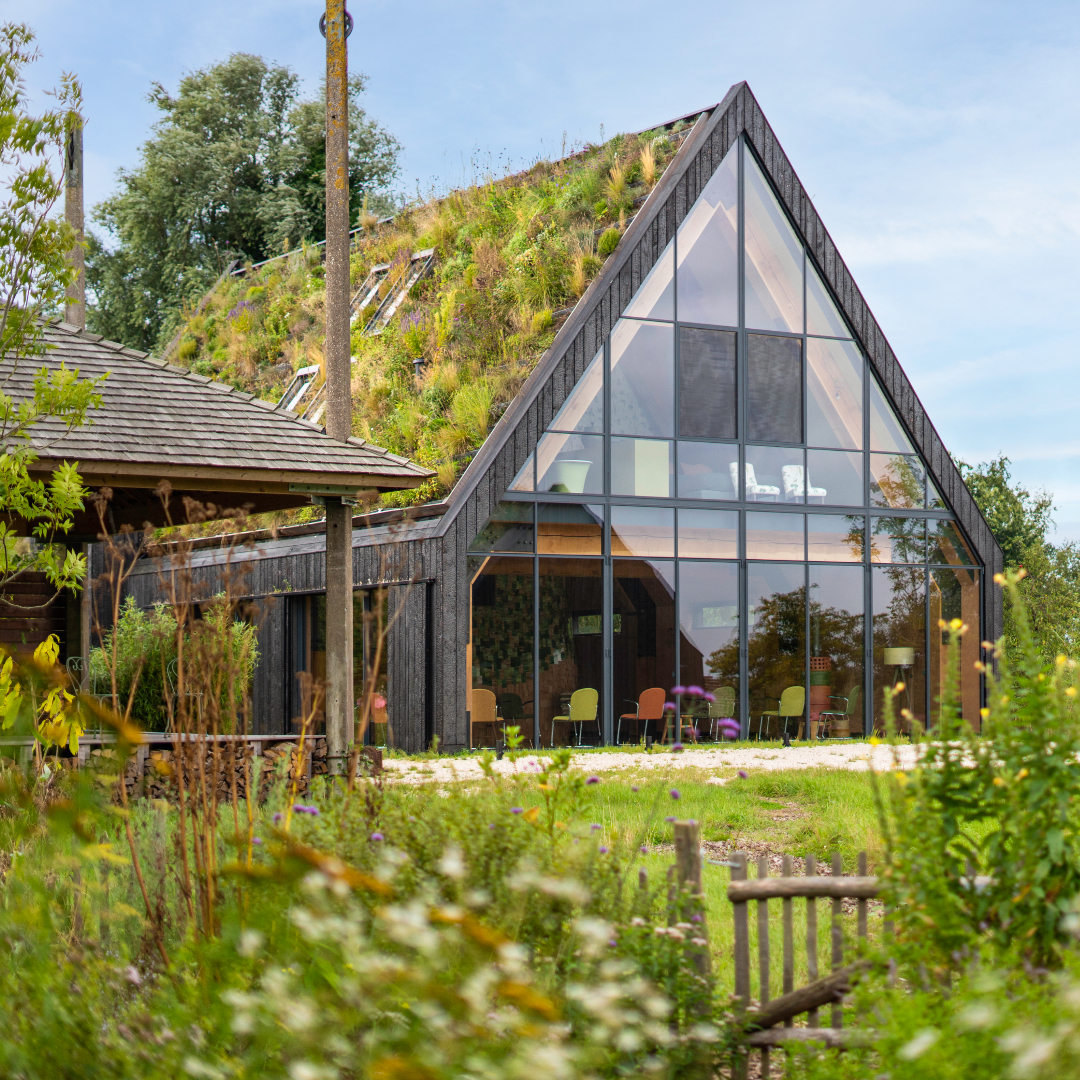
For a spacious plot in the rural village of Westbroek, ORGA architects designed a completely new residential environment. The main house, featuring an impressive 10-meter-high timber frame structure, forms an architectural ensemble together with an auxiliary building that has been carefully positioned within the landscape.
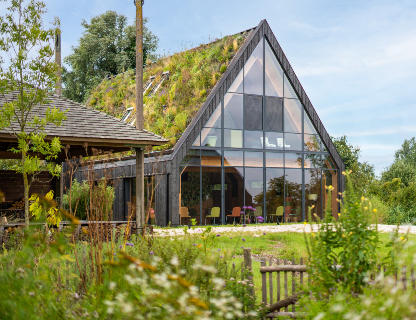
Natural and contemporary materials were used for both the façades and roof edges. Both roofs are covered with green vegetation, which is not only aesthetically appealing but also contributes to biodiversity, water retention, and thermal insulation.
Two variants of Shou Sugi Ban were used for the façade cladding: Marugame and Naoshima. The characteristic pattern of Naoshima is visible on both the house and the outbuilding, emphasizing the natural strength of the material.
The result is a project in which architecture, landscape, and material use come together in balance.
- Architect: ORGA architect
- Constructor:Bouwbedrijf van Engen
- Photograph :wij-zien.nl
3. Biobased Forest House in Stameren – Building with Natural Materials
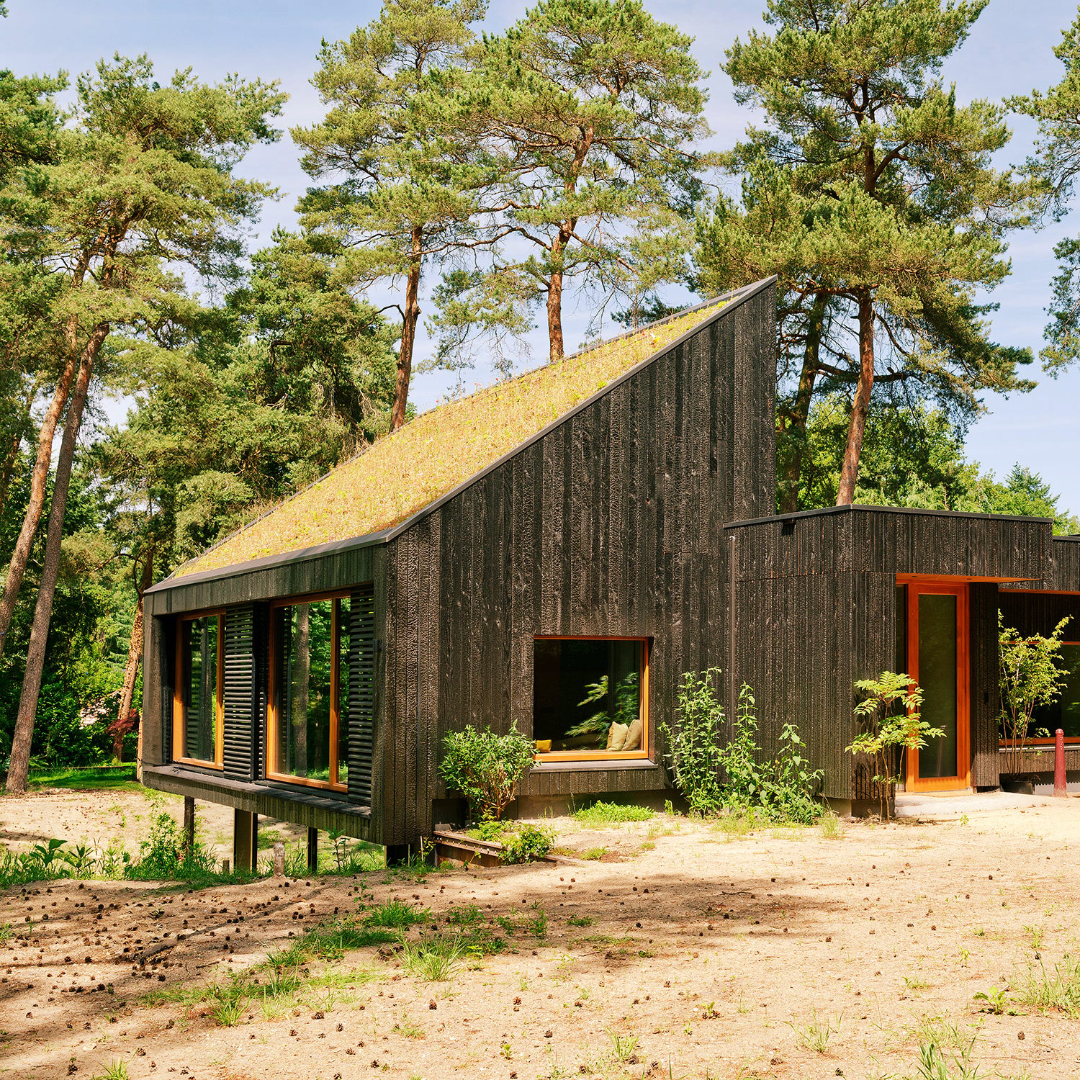
In the Stameren forest near Maarn stands a house designed entirely from its relationship with the surrounding landscape. The home is located at the transition between forest and heathland, giving each side of the house a different spatial experience.
On the forest side, the house feels sheltered and intimate. On the heathland side, large glass façades open toward the landscape, providing abundant daylight and panoramic views.
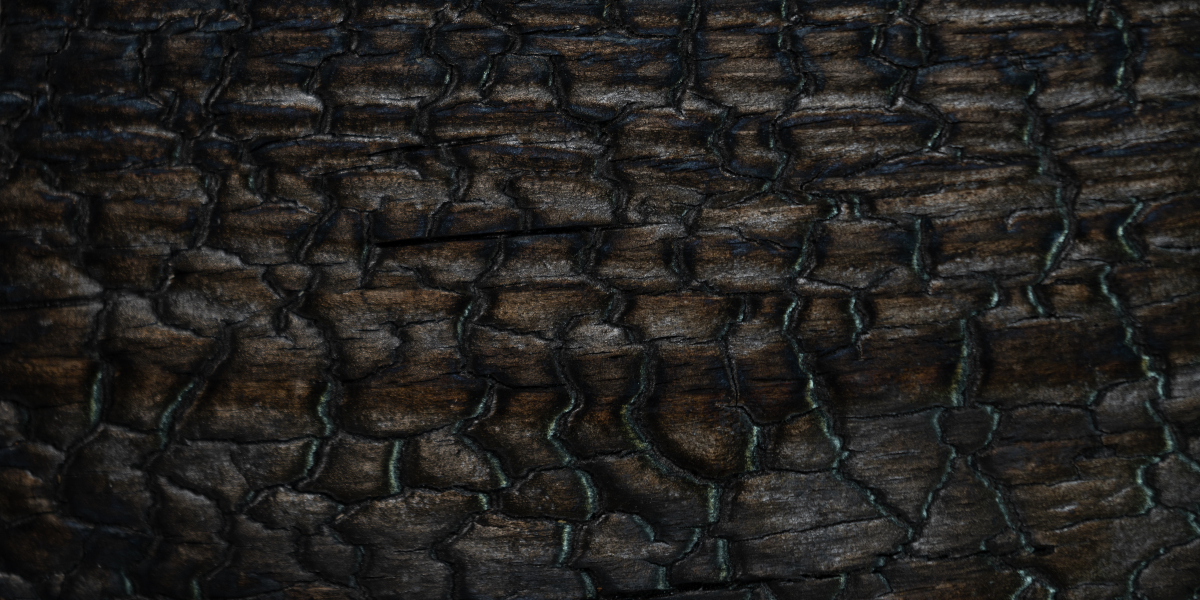
The architects from ORGA deliberately chose biobased materials, including a façade made of charred Douglas wood (Naoshima). These natural materials strengthen the connection with the environment and contribute to a sustainable and healthy living climate.
This project demonstrates how sustainable architecture and landscape integration can reinforce each other.
- Architect : Steven van Leeuwen – ORGA architect
- Constructor: Bouwbedrijf van Engen
4. Barn House in Deventer – Minimalist Barn Architecture
The barn house is a well-known archetype within contemporary sustainable architecture. In Deventer, a minimalist Finnhouse barn residence was realized in which simplicity and natural materials are central.
The building combines a green roof with Marugame façade cladding, creating a strong yet calm architectural expression. The wooden window frames are deliberately accentuated so that the openings in the façade receive extra emphasis.
On the garden side, there is a covered terrace that creates a smooth transition between indoors and outdoors. In this way, the home forms a harmonious whole with its natural surroundings.

5. Holiday Home Schermerland – A Place for Peace and Relaxation
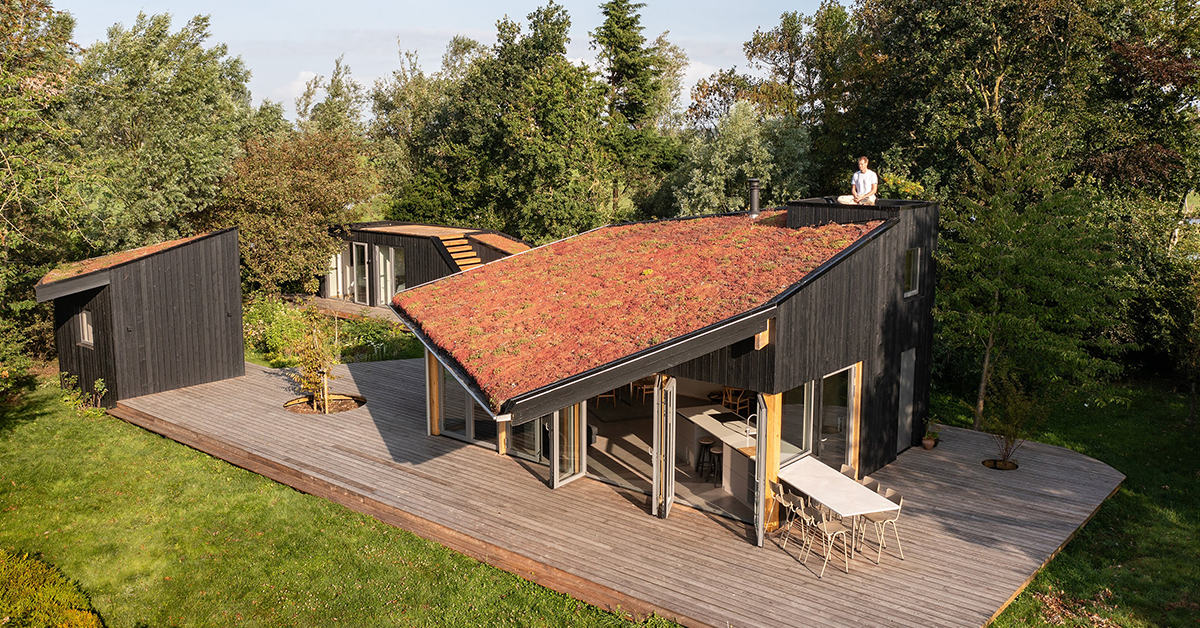
Surrounded by water and nature, this special holiday home is located in Schermerland. The design focuses entirely on relaxation and the relationship between indoor and outdoor spaces.
The house consists of three separate volumes that together form one architectural composition. By using the same façade cladding (Shodoshima) for all volumes, visual unity is achieved.
A special element of the design is the yoga room, created specifically to support calmness and mindfulness.
Inside and outside flow seamlessly into one another. For example, a long table extends from the kitchen to the terrace and garden, allowing the landscape to become part of the daily use of the house.
- Architects: Caspar Schols, Quentin Martin, Ludvig Holmen, Daria Nepop
- Constructor: Siem Woetsenburg
- Photograph: Jorrit ’t Hoen
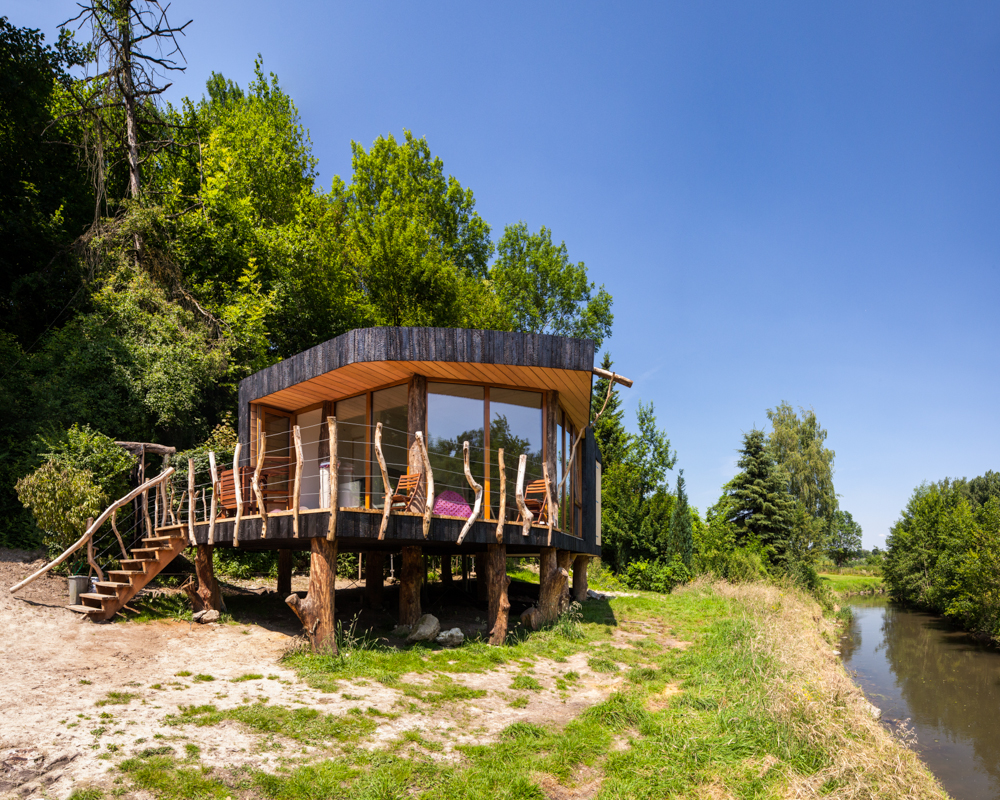
6. Idyllic Geul Riverbank – Climate-Adaptive Building
Architects Pieter Weijnen and Mark Spijkerman, in collaboration with contractor WHD Interieurbouw and Goof Weijnen, realized a home at an idyllic location along the Geul River that fully responds to the dynamics of the landscape.
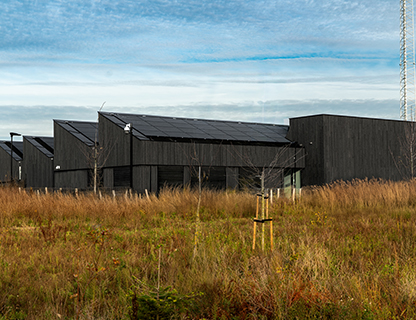
Because the area regularly floods, the house was built entirely on tree-trunk constructions, elevating it high above the water level. In addition to having no CO₂ footprint, the home literally has no footprint on the ground.
The design is energy-neutral thanks to:
- solar collectors for hot water
- solar panels for electricity
- a helophyte filter for water purification
The structure consists of Kerto beams, SLS beams, and wooden I-beams. Cellulose was used for insulation, and the façade is finished in Robinia wood with a Naoshima Shou Sugi Ban finish.
This project demonstrates how sustainable architecture can also offer solutions for climate adaptation and changing landscapes.
- Architect : Pieter Weijnen & Mark Spijkerman
- Constructor :WHD Interieurbouw, Goof Weijnen
- Photograph :IC4U & Hans Peter Föllmi
Sustainable Architecture as a Strategy for the Future
The projects in this blog show that sustainable architecture is much more than energy efficiency. It is an integrated design approach in which material choices, landscape, health, and longevity come together.
For architects, this means designing from a broader vision:
- building with natural and biobased materials
- designing with respect for the environment
- integrating biodiversity and water management
- choosing materials with a long lifespan
Techniques such as Shou Sugi Ban show how traditional knowledge and modern architecture can strengthen each other. By naturally protecting wood through charring, a durable façade solution is created that is aesthetic, low-maintenance, and circular.
The future of architecture lies in buildings that are not only beautiful but also contribute to a healthy living environment and a sustainable built world.

FAQ
Latest reviews
The “Paradox.” Burning wood to protect it.
It sounds contradictory — but it’s brilliant.
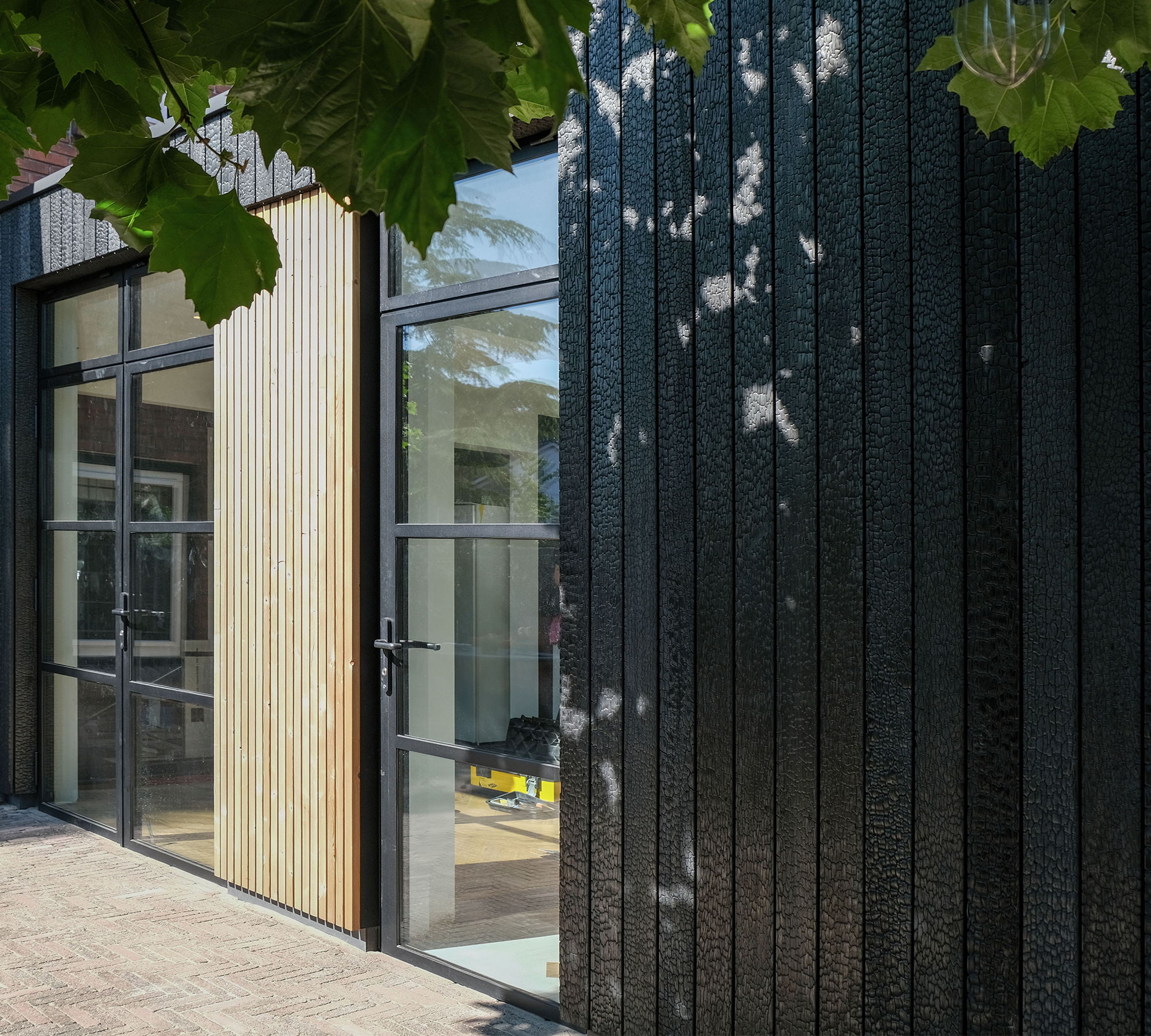
At ORGA, we’re big fans of biobased materials that truly prove their worth. Take our collaboration with Zwarthout | Shou Sugi Ban, for example. By charring wood using the centuries-old Shou Sugi Ban technique, a natural protective layer is created — without the need for paint or chemicals.
The result is a façade with character, built to last for generations. In the three recent projects, we’ve seen how it creates a robust, timeless appearance, while simultaneously contributing to refined, high-quality architecture.
Less maintenance, and a building that only becomes more beautiful with age.
That, to us, is what truly future-proof design looks like.
“We recently replaced the potted decked timber on our farmhouse in the Beemster region with Shodoshima semi-gloss from Zwarthout l Shou Sugi Ban. With special planks 25 cm wide, it looks great on a farmhouse. A very beautiful product and great service from Zwarthout l Shou Sugi Ban!”
”We chose Yoroi for several reasons. First of all, we like the Japanese classical technique used for burning the bamboo. Due to the burning technique Shou Sugi Ban, Yoroi has a fire class B and is maintenance-free. Finally, the black charred bamboo is a regrowable material and aesthetically matches our design perfectly.”
”As a gardener, it is an honour to work with such beautiful traditional products.
The delivery times are also great and you get friendly service.”