Menu
Shou Sugi Ban maintenance
Shou Sugi Ban, or Yakisugi, is a traditional Japanese technique in which coniferous wood is charred on one side. Traditionally, this was done by binding three boards together to form a chimney and starting a fire at the bottom. The original reason for charring was, ironically, fire prevention. As Japanese houses were mostly made of wood, inhabitants of the villages and towns were very aware of fire risks. The scorching of the façades created a fire-retardant carbon layer. They also discovered that this layer offered good protection against vermin and fungus. The ancient art of Shou Sugi Ban is still being used on houses on the islands of Kanawa’s prefecture. Shou Sugi Ban or Yakisugi ties in with the Japanese life philosophy of Wabi Sabi, and the pure vision of beauty.
How long does the wood last?
The service life of the wood depends on the durability class of the wood species and the detailing of the building. Our wood species have a durability class 1, 2 or 3.
Durability class 1: 25 years and more
Durability class 2: 15 to 25 years
Durability class 3: 10 to 15 years
The carbon layer of the burnt wood weathers outdoors in the long run under the influence of wind, rain and hail. The lifespan of the carbon layer depends on the orientation of the facade and the location of the building.
Please contact us for more information.
When used indoors, the wood lasts as long as untreated wood, i.e. many decades. Moreover, this wood is fixed, making it less vulnerable.
What guarantee do you give on the burnt wood?
We give a guarantee on the quality of the wood upon delivery. The boards are delivered without defects and will be replaced free of charge if technical defects occur in the first two years. This includes, for example, the tearing of wood or the failure of knots. It goes without saying that the planks must be assembled correctly. We will be happy to advise you on this.
There is no guarantee on the carbon layer itself. All layers of carbon are more or less vulnerable. The detailed provisions can be found in our General Terms and Conditions.
Does the carbon layer always stay the same?
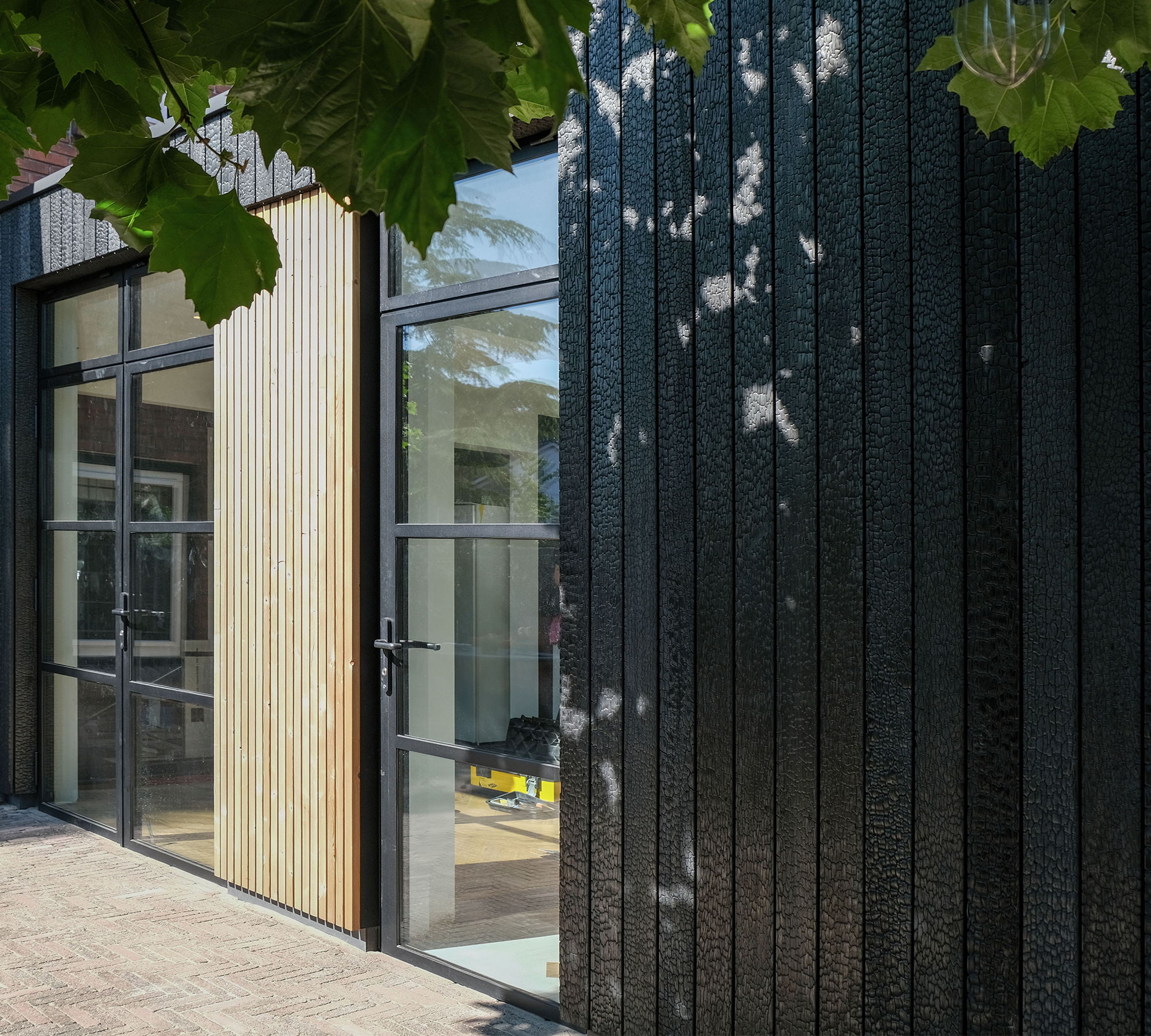
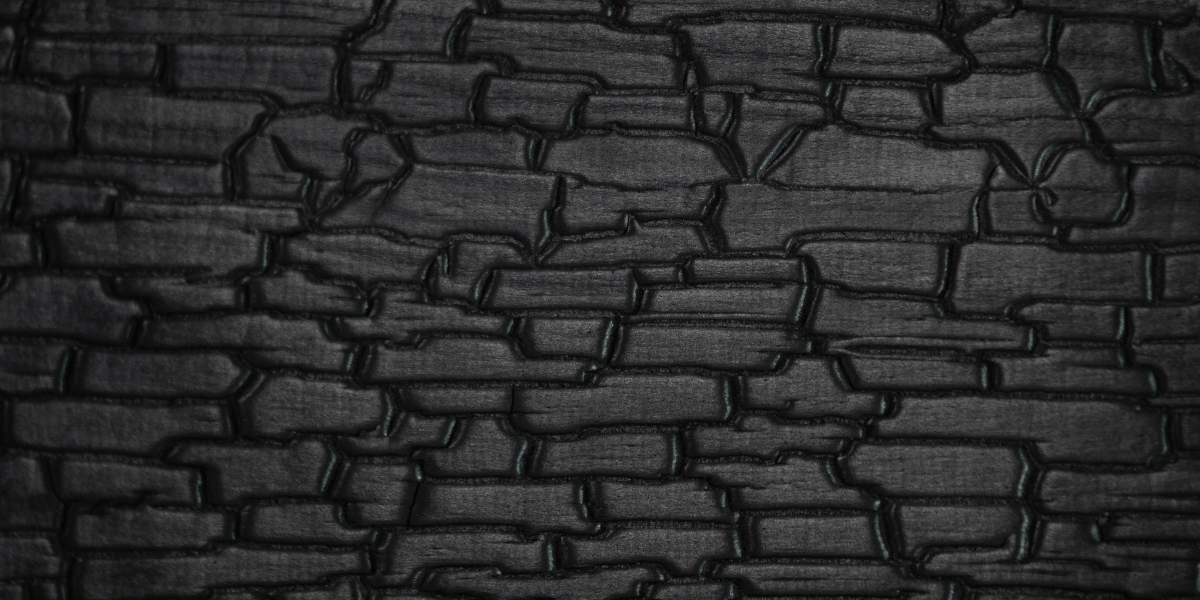
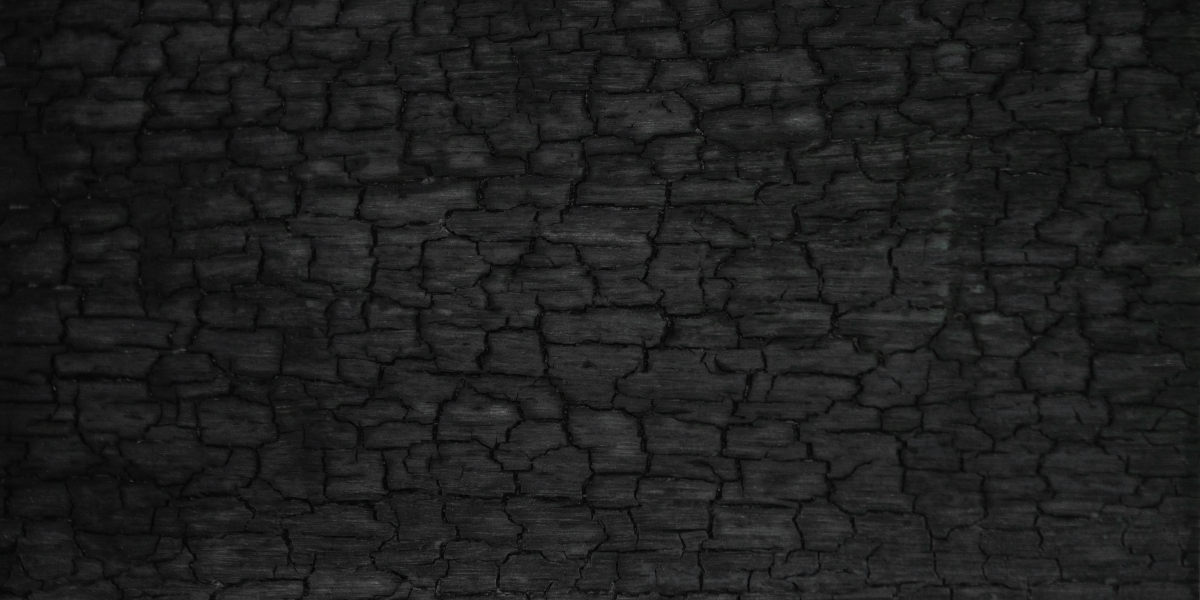
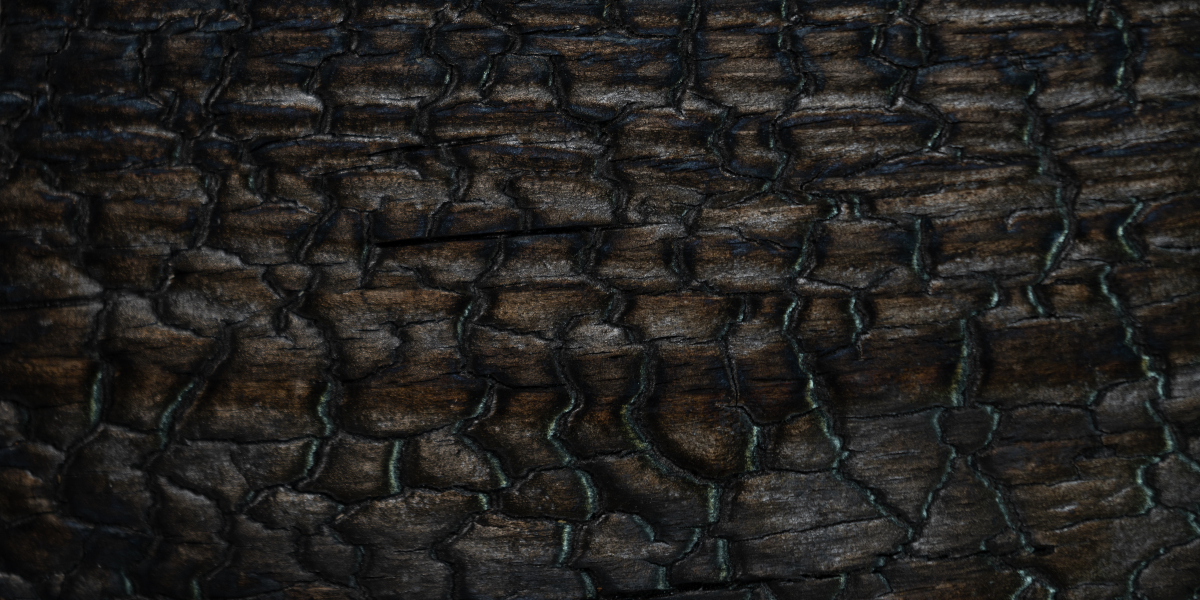
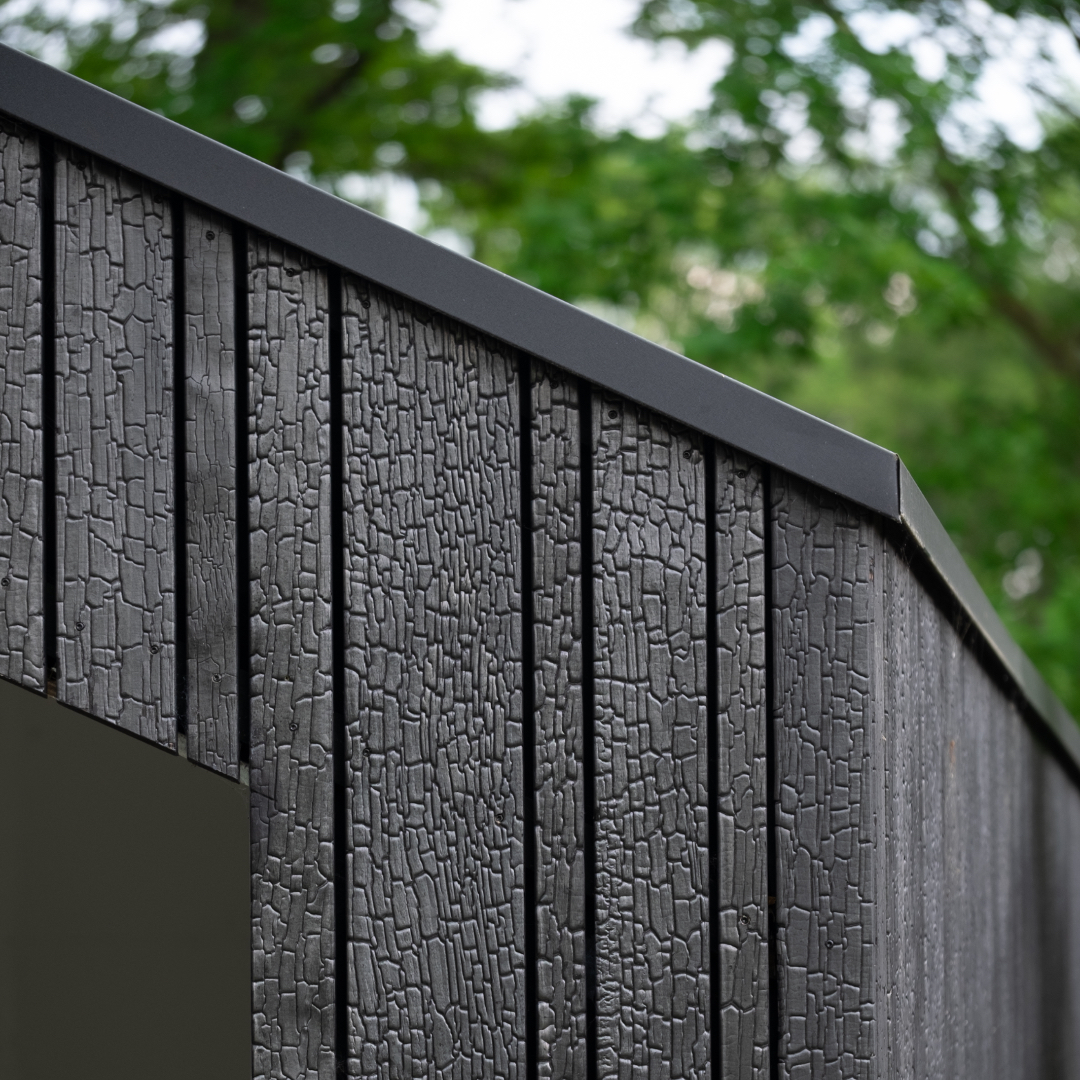
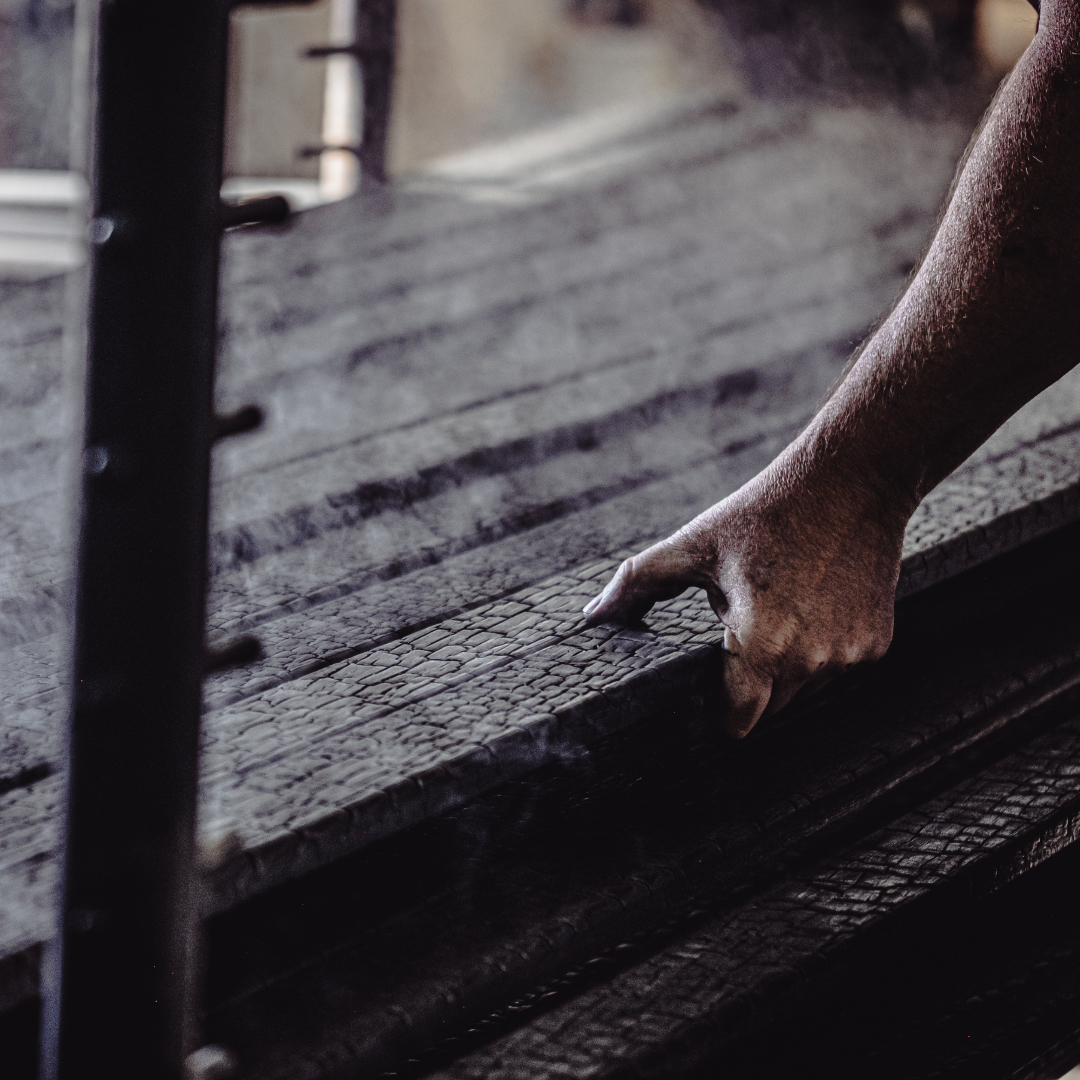
This depends on the type, but in principle the carbon layer of our burnt wood weathers under the influence of wind, rain and hail. The lifespan of the carbon layer depends on the orientation of the facade and the location of the building. The black carbon layer of our burnt wood ages over the years and then acquires a beautiful patina (weathering), such as a light sheen, or a craquelé surface, for example. The natural aging and weathering over time does not detract from the visual appeal, on the contrary, it contributes to it! This fits within the above-mentioned Japanese philosophy of life of Wabi Sabi. On the product data sheets of our products (downloadable on the product page), you can see how the wood ages.
For indoor use we always fix the charred wood. For the exterior we often advise not to fix the wood. This ensures that the charred wood retains a beautiful, natural shine and is also more durable than when the wood is fixed. In the course of time the release of the wood will decrease and for a number of variants this will eventually stop. Most burned types of wood, also for exterior use, can also be fixed if desired. We will be happy to advise you about this.
How do I maintain the Shou Sugi Ban wood?
Unfixed planks with a carbon layer do not require any maintenance.
Wooden boards that have been burned and brushed have a stain or oil layer. This wood requires periodic maintenance every three to five years. If you do not maintain Shodoshima, Takamatsu, Nakatado and Sakaide exterior, the stain layer will eventually harden and flake. Below this, the white wood will emerge and ‘age’.
The product specification sheet that you will find on each product page explains exactly if and what maintenance the different products need. Would you like to find out more about Shou Sugi Ban wood? Feel free to contact us.
FAQ
Latest reviews
The “Paradox.” Burning wood to protect it.
It sounds contradictory — but it’s brilliant.
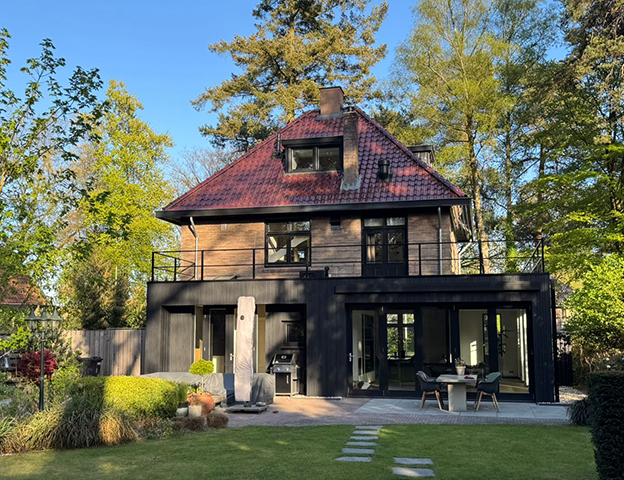
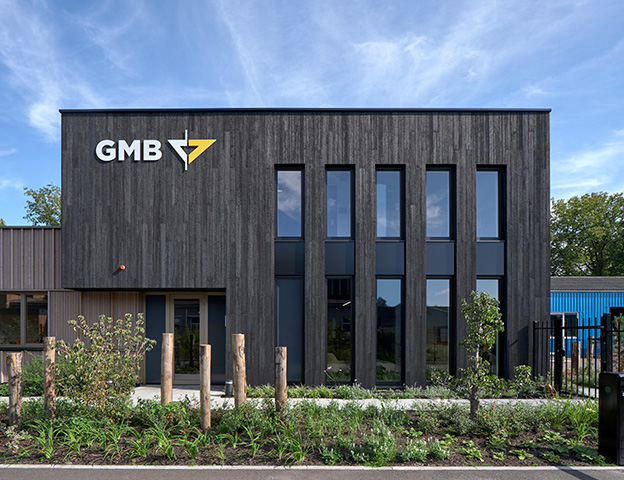
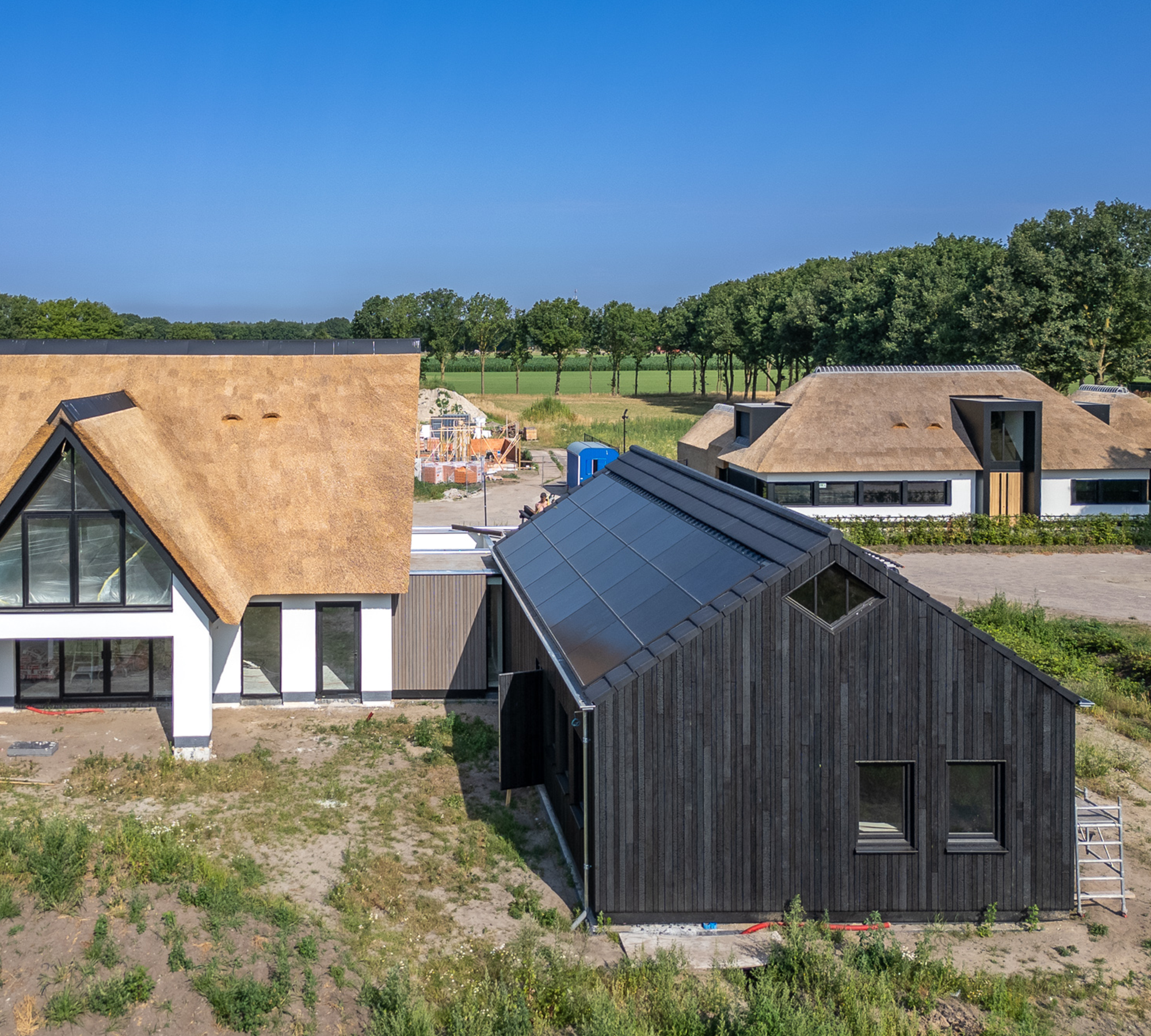
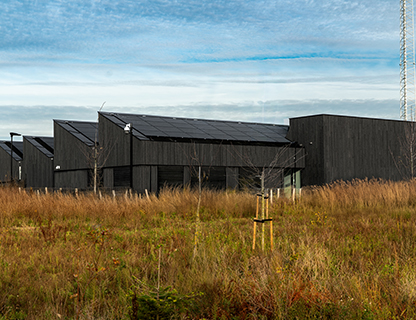
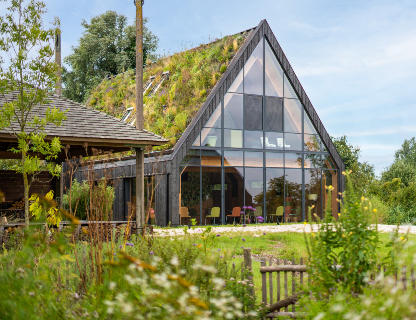
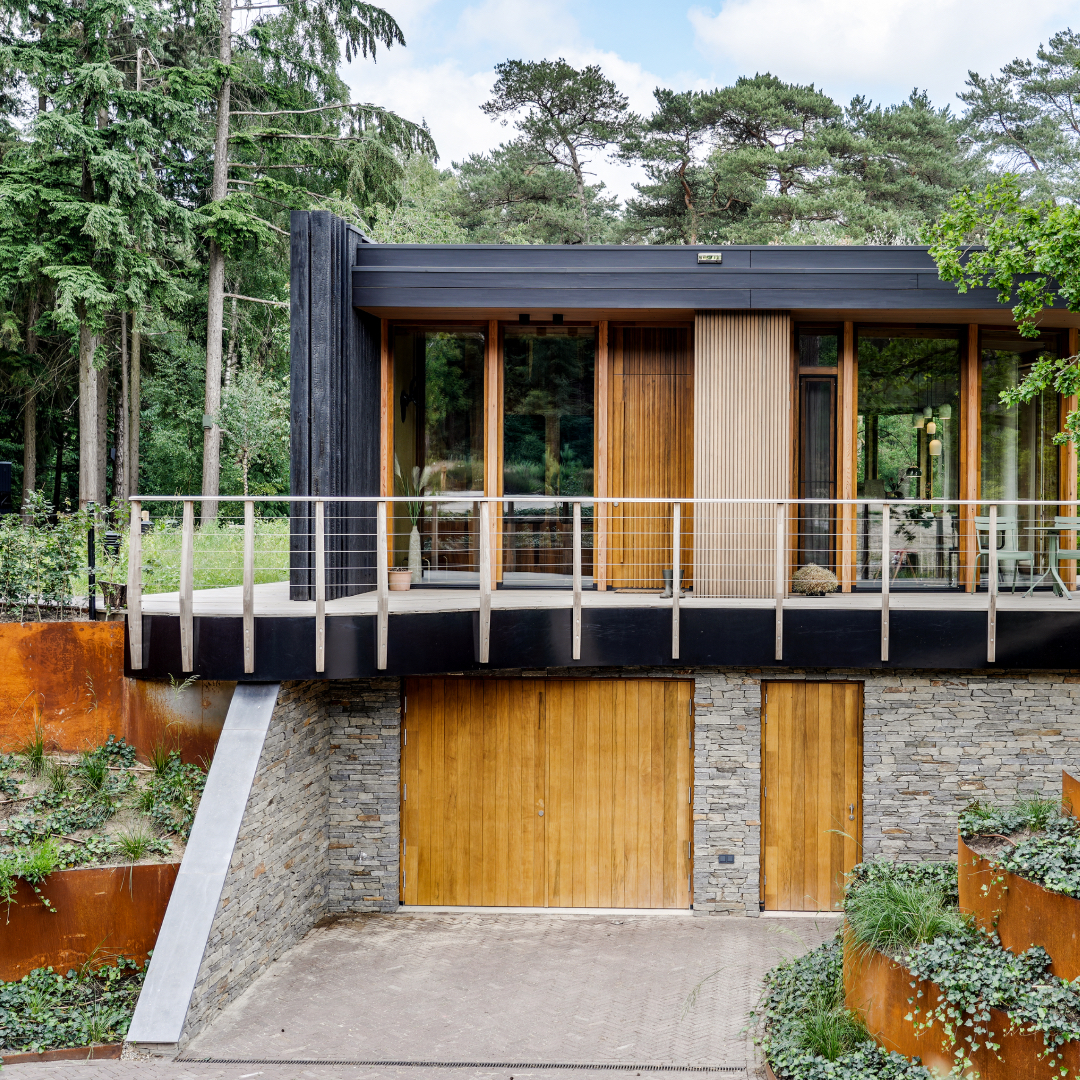
At ORGA, we’re big fans of biobased materials that truly prove their worth. Take our collaboration with Zwarthout | Shou Sugi Ban, for example. By charring wood using the centuries-old Shou Sugi Ban technique, a natural protective layer is created — without the need for paint or chemicals.
The result is a façade with character, built to last for generations. In the three recent projects, we’ve seen how it creates a robust, timeless appearance, while simultaneously contributing to refined, high-quality architecture.
Less maintenance, and a building that only becomes more beautiful with age.
That, to us, is what truly future-proof design looks like.
“We recently replaced the potted decked timber on our farmhouse in the Beemster region with Shodoshima semi-gloss from Zwarthout l Shou Sugi Ban. With special planks 25 cm wide, it looks great on a farmhouse. A very beautiful product and great service from Zwarthout l Shou Sugi Ban!”
”We chose Yoroi for several reasons. First of all, we like the Japanese classical technique used for burning the bamboo. Due to the burning technique Shou Sugi Ban, Yoroi has a fire class B and is maintenance-free. Finally, the black charred bamboo is a regrowable material and aesthetically matches our design perfectly.”
”As a gardener, it is an honour to work with such beautiful traditional products.
The delivery times are also great and you get friendly service.”