Contrasting Extension with Omiyama
In this collaboration between Studio TMOJ and Zeegers Kleinbouw, Omiyama proves to be more than a façade finish: it functions as an architectural instrument that brings together contrast, durability and expressive power within a clearly articulated extension.
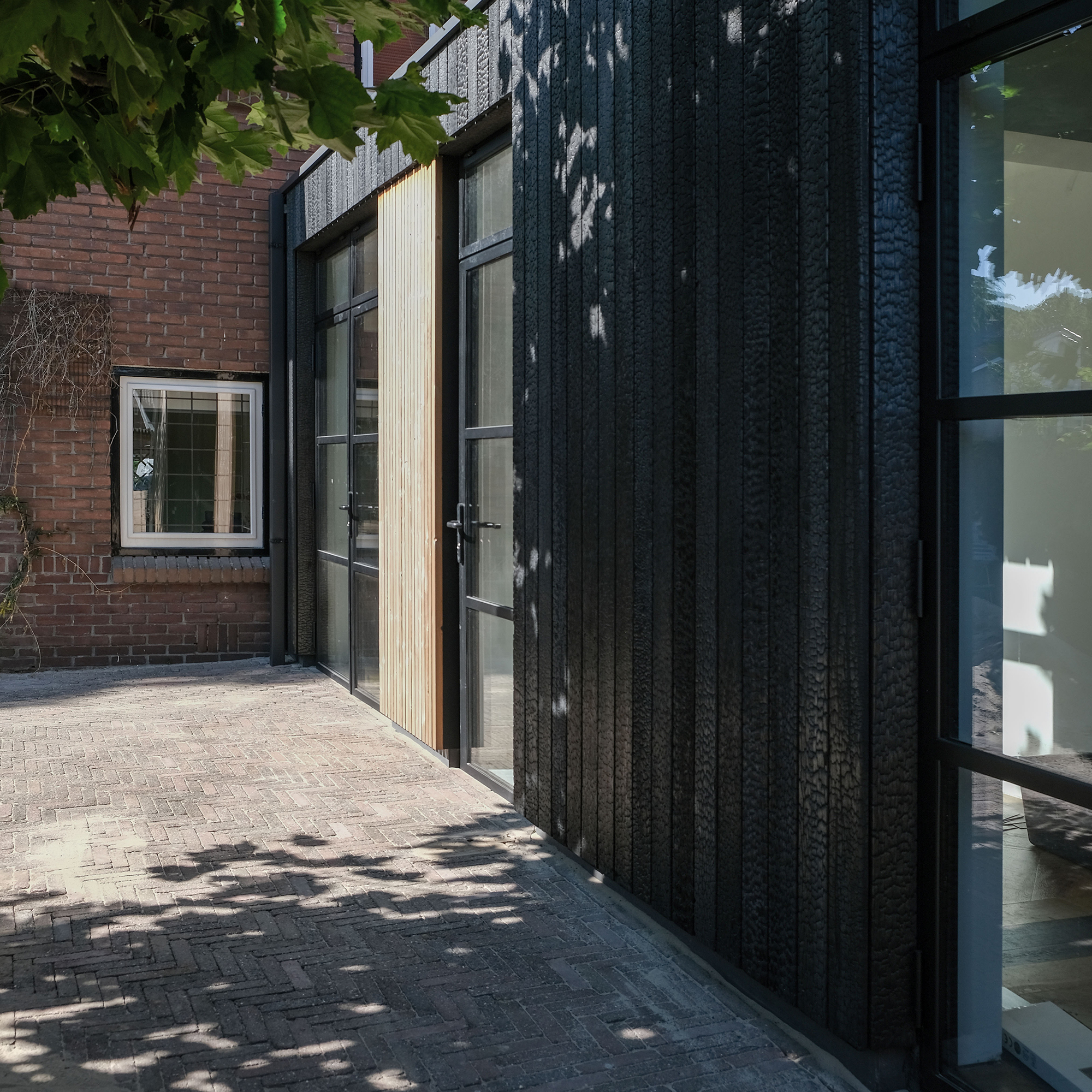
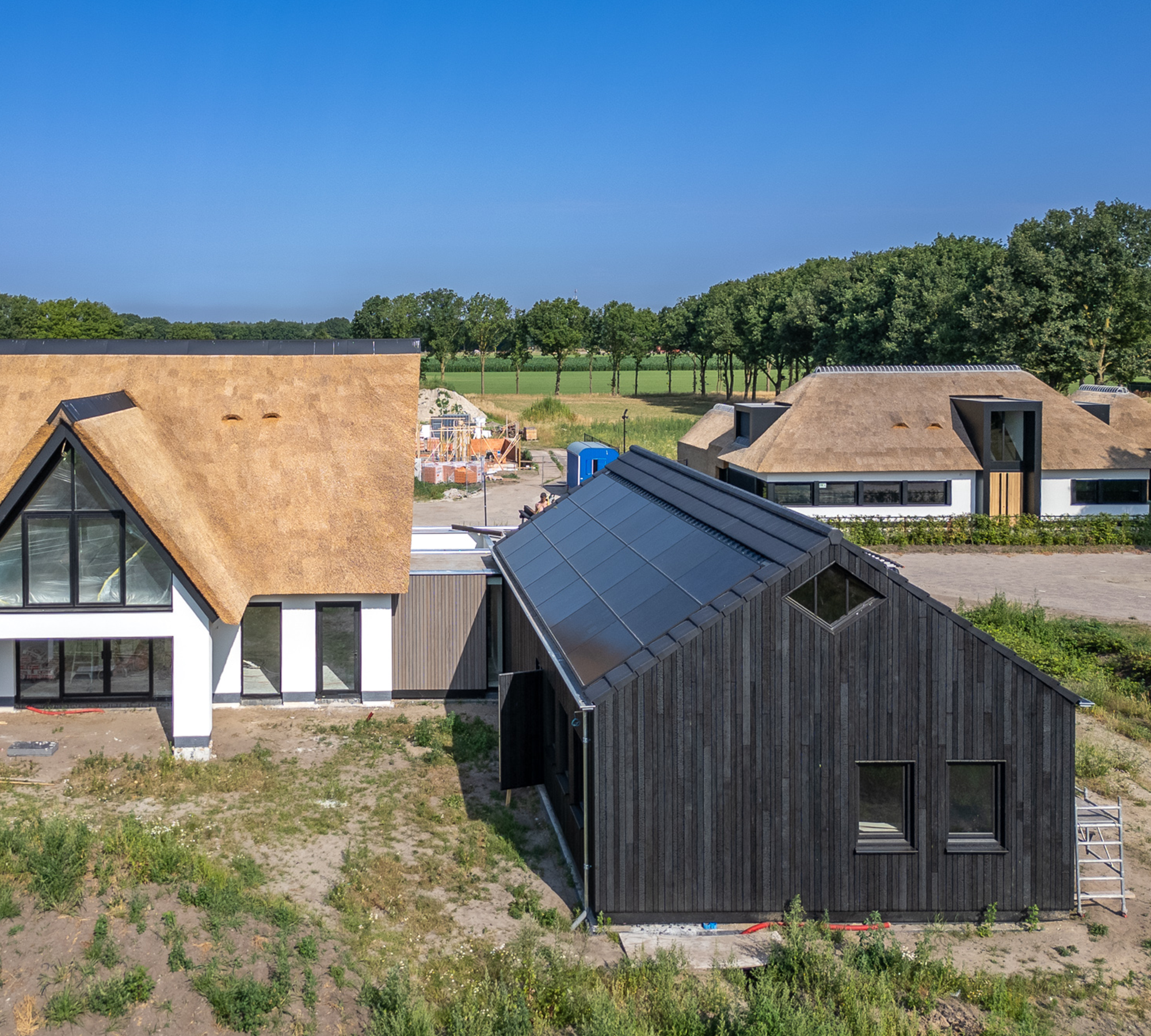
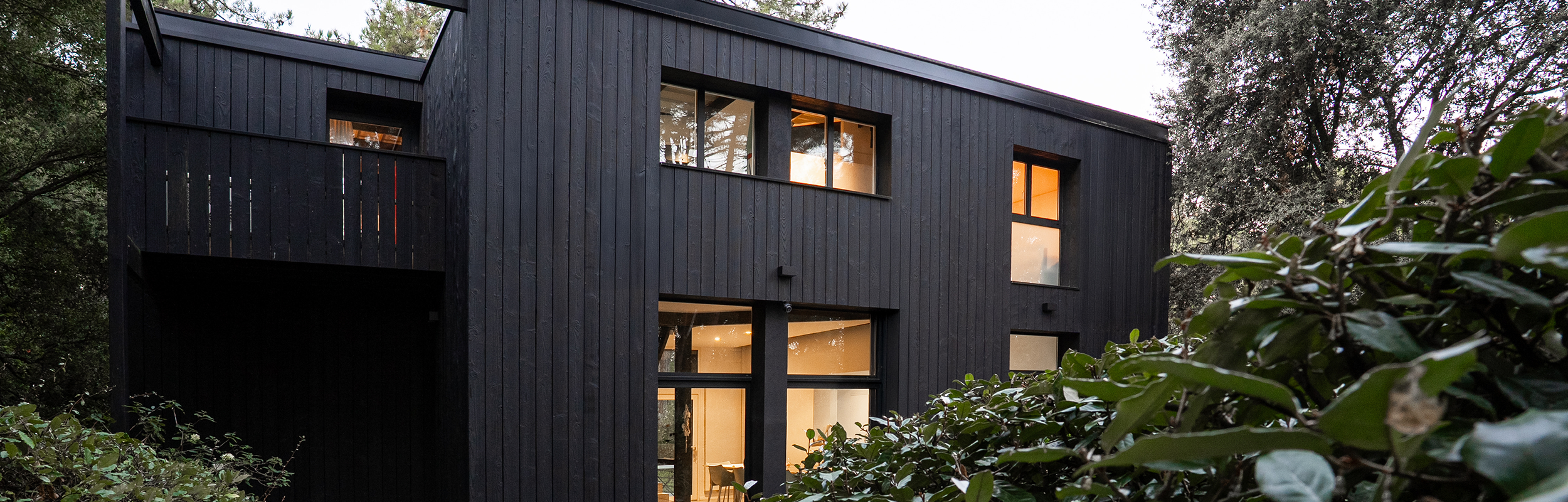
Designed by Studio TMOJ, the addition is conceived as a legible, autonomous volume that deliberately distinguishes itself from the existing brick architecture. Materiality plays a pivotal role in this strategy. With Omiyama as façade cladding, the new volume acquires a strong, tactile identity that contrasts with its traditional context while maintaining overall cohesion.
Materiality as the Carrier of the Design
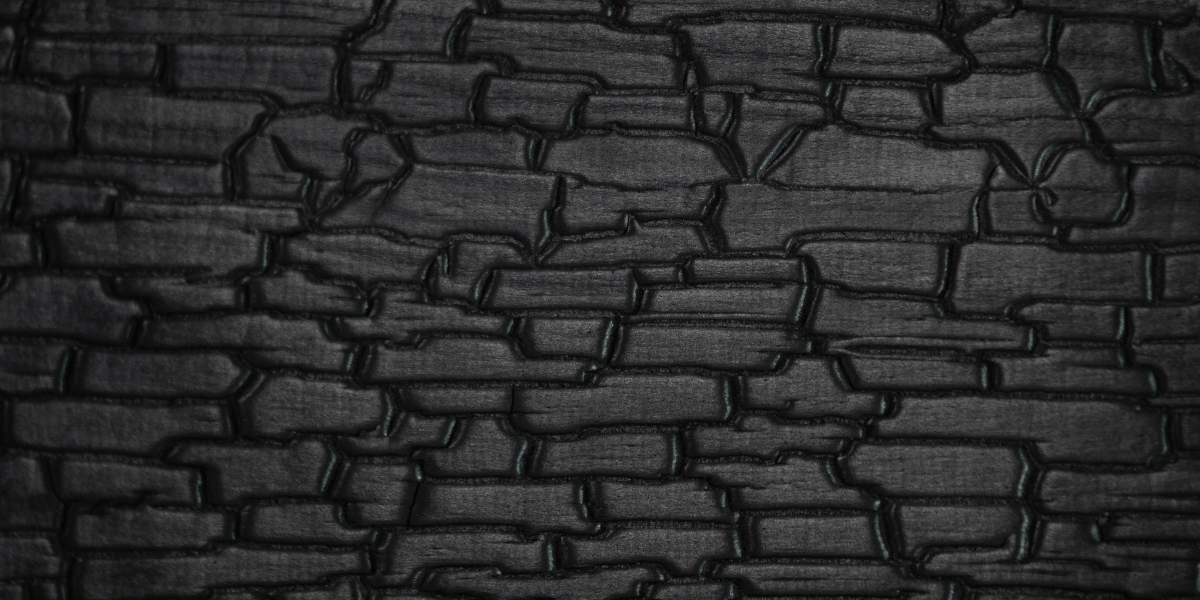
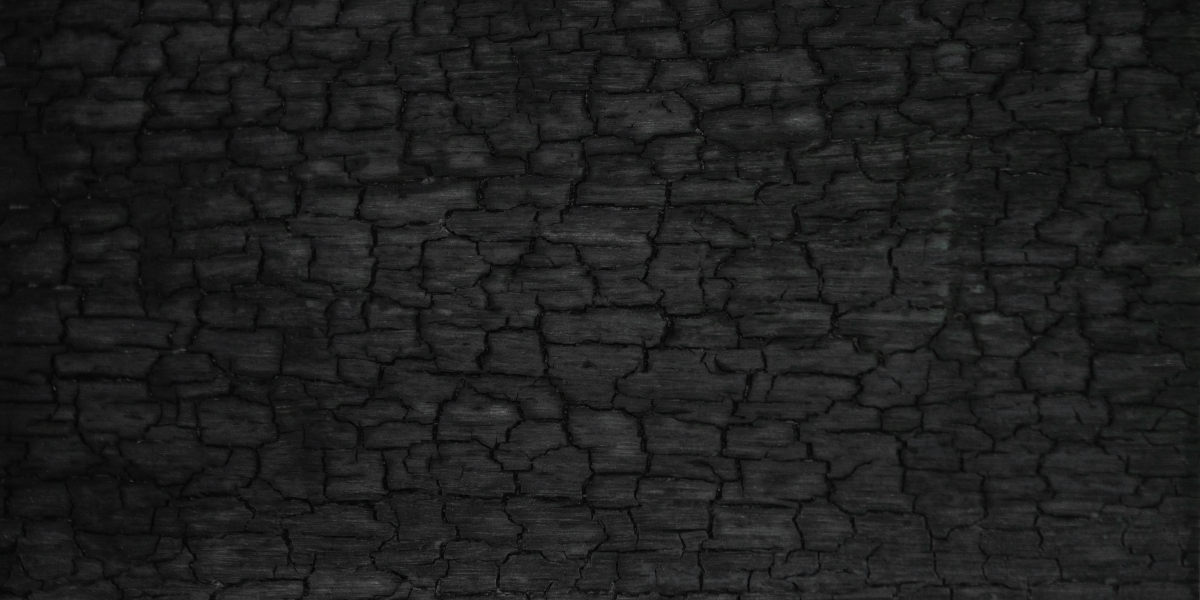
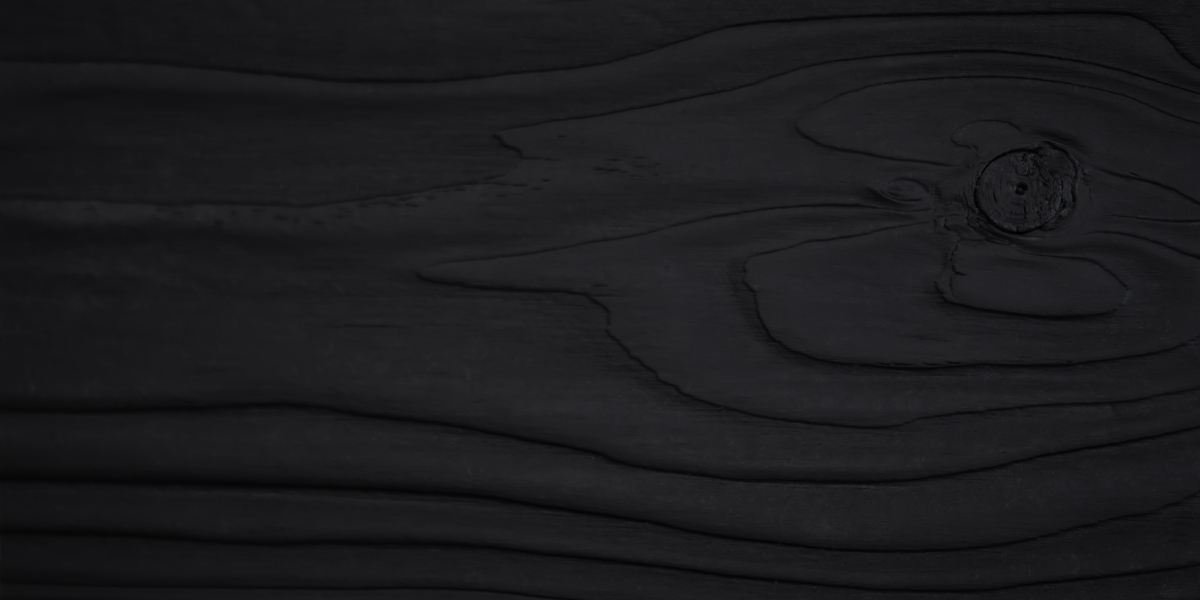
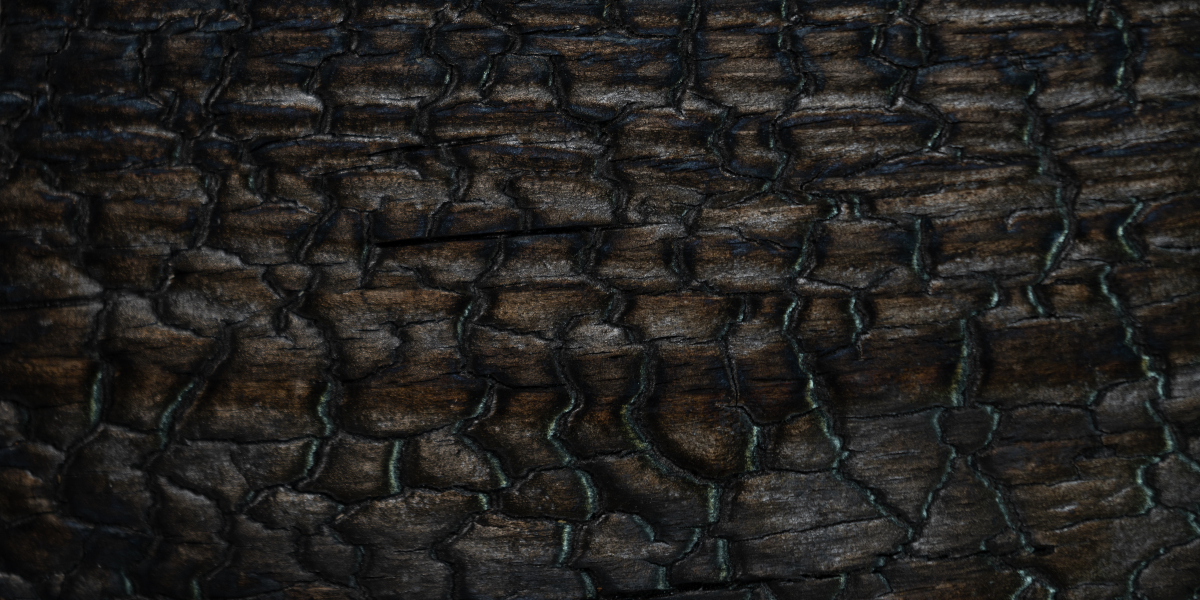
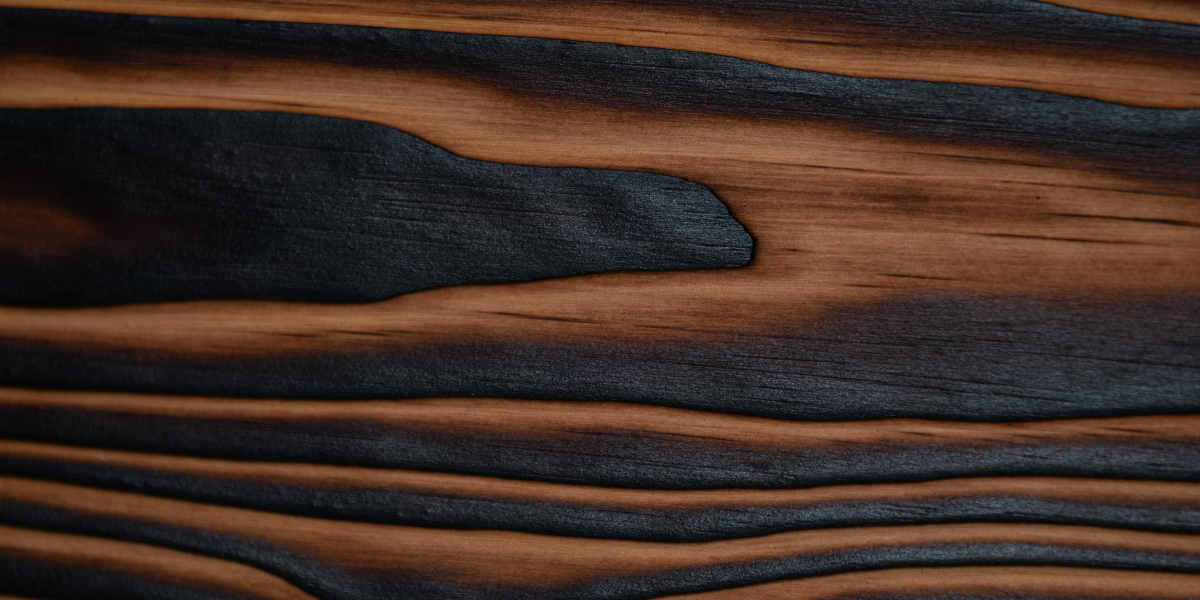
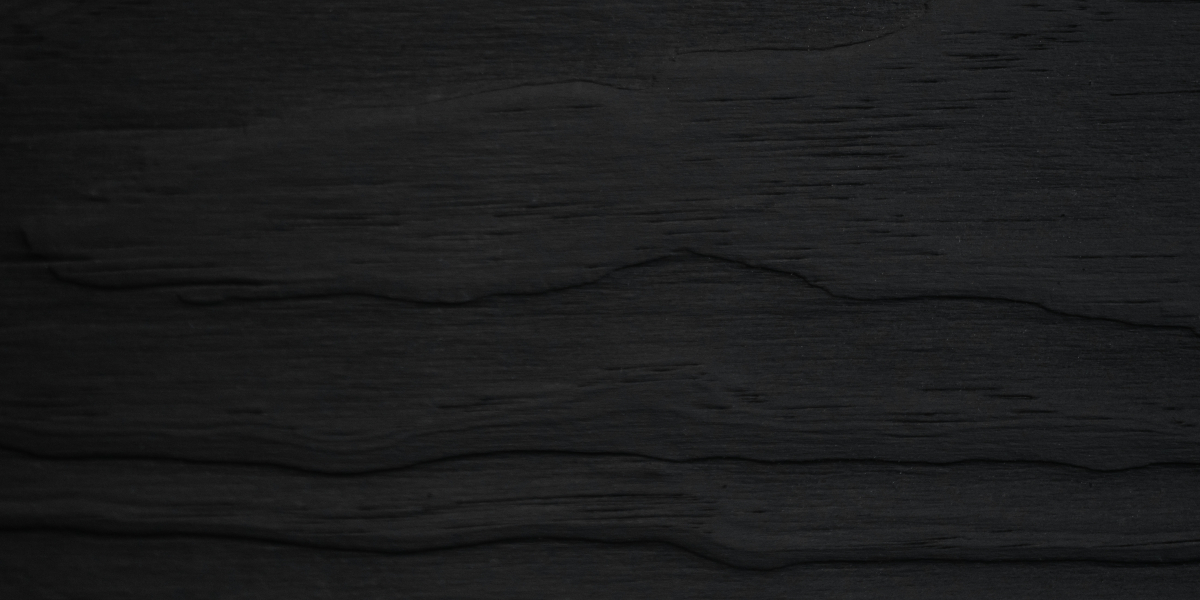
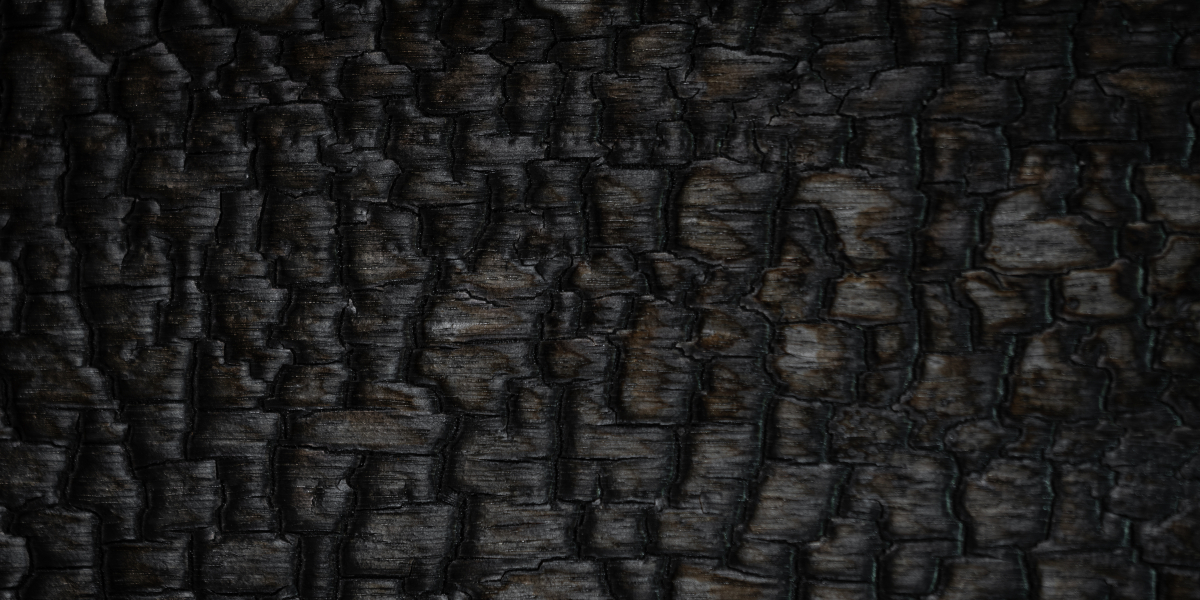
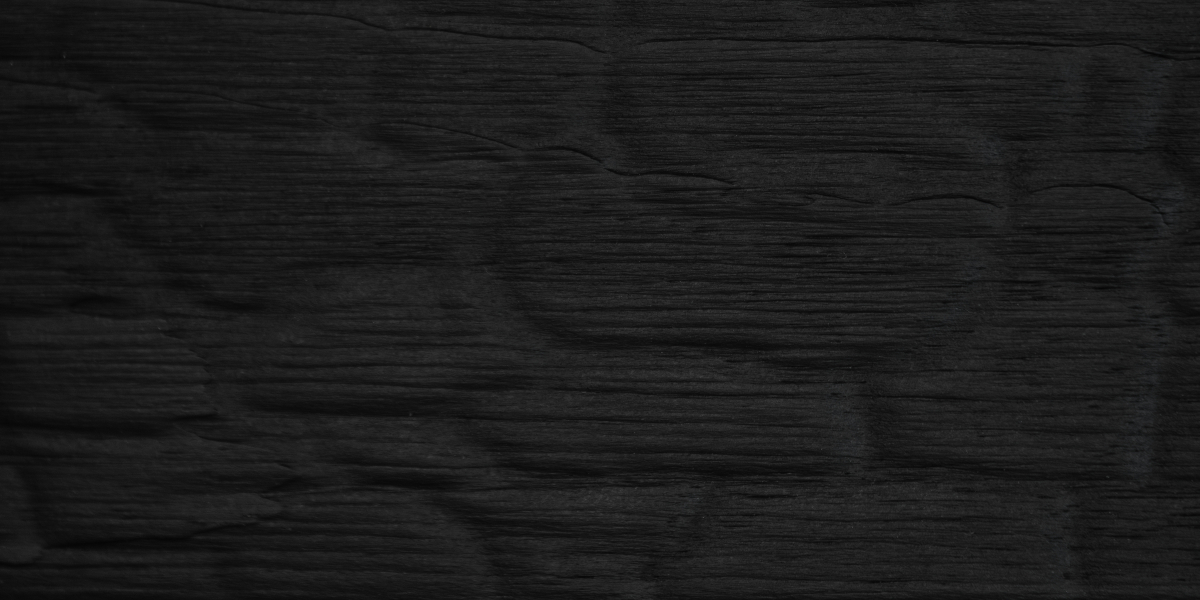
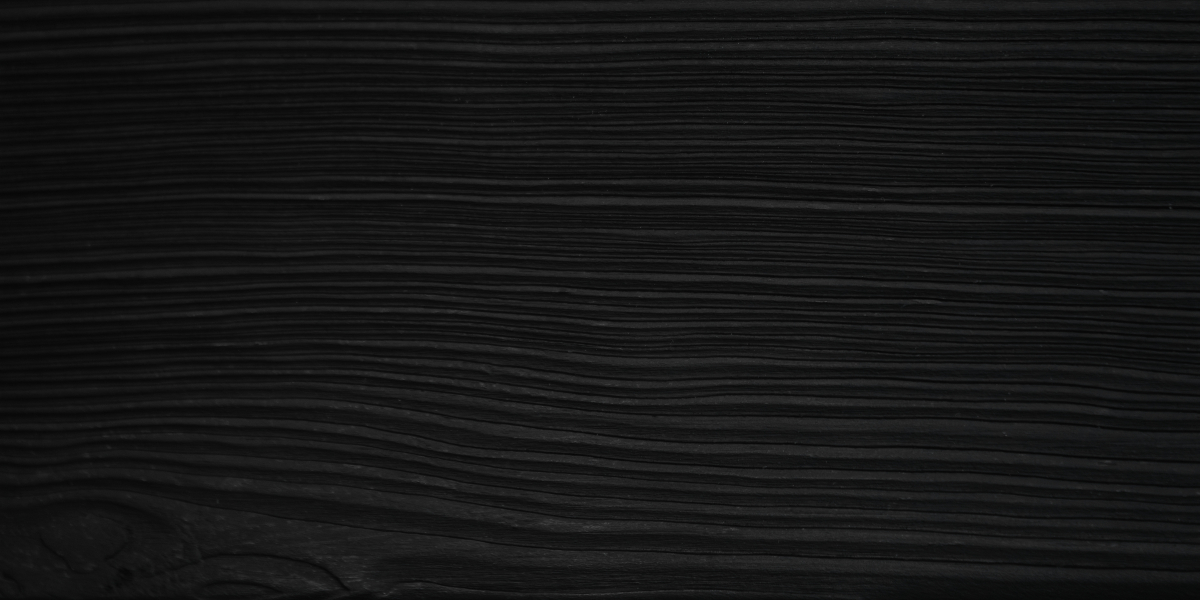
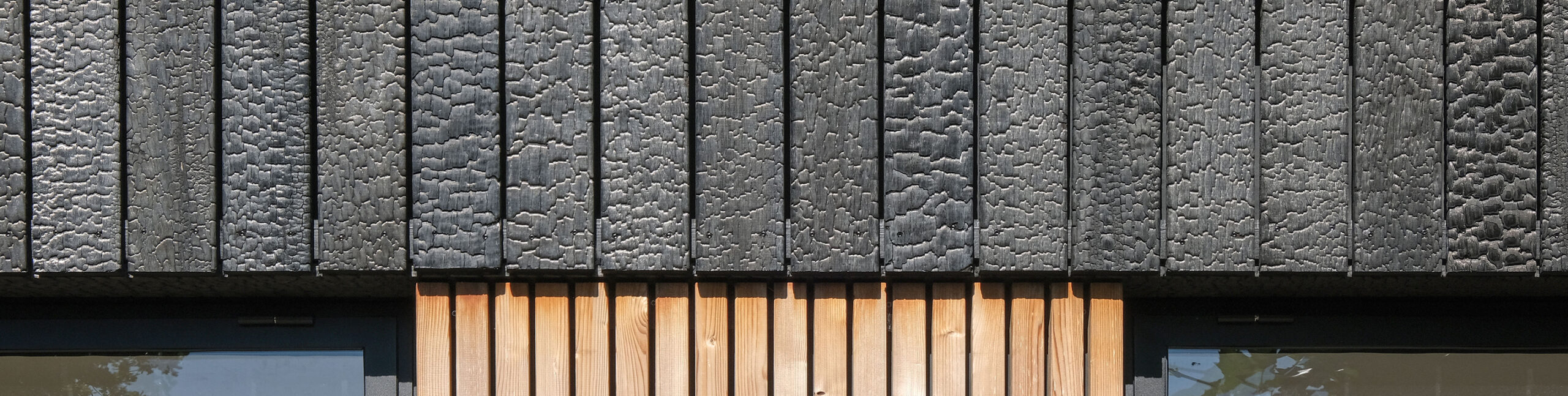
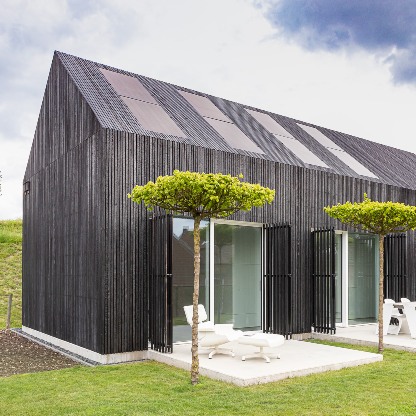
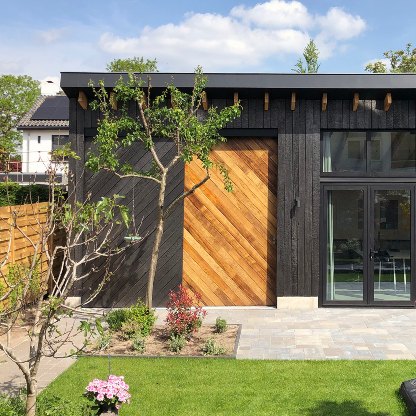
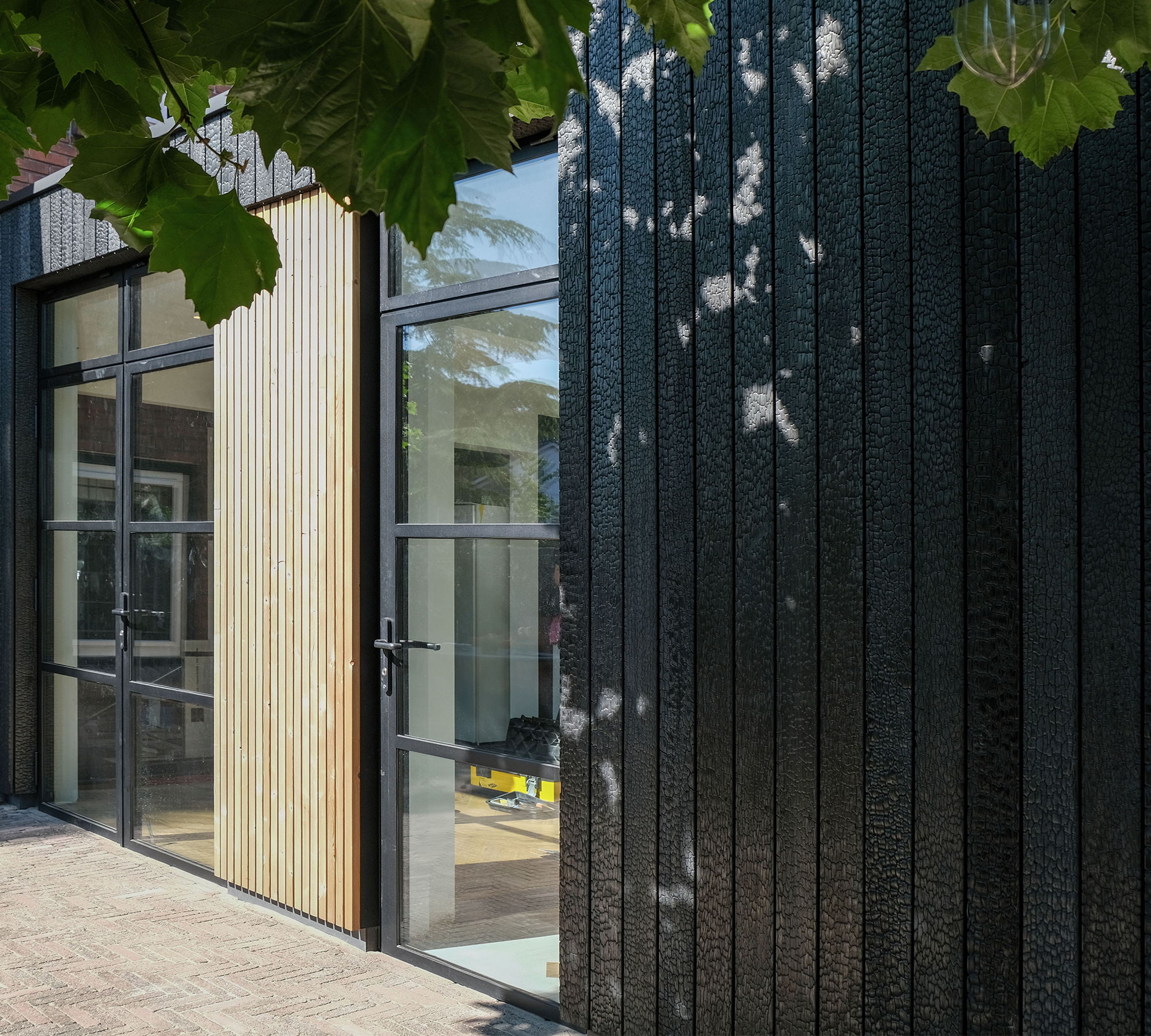
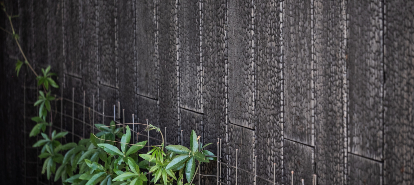
The façade is executed in vertical Omiyama elements with a deeply charred surface layer. The texture is irregular and pronouncedly matte. In its fixated state, the wood appears a deep matte black; under sunlight, a subtle bronze glow emerges. This interplay between light and texture enhances the perception of the volume, giving the building a dynamic expression throughout the day.
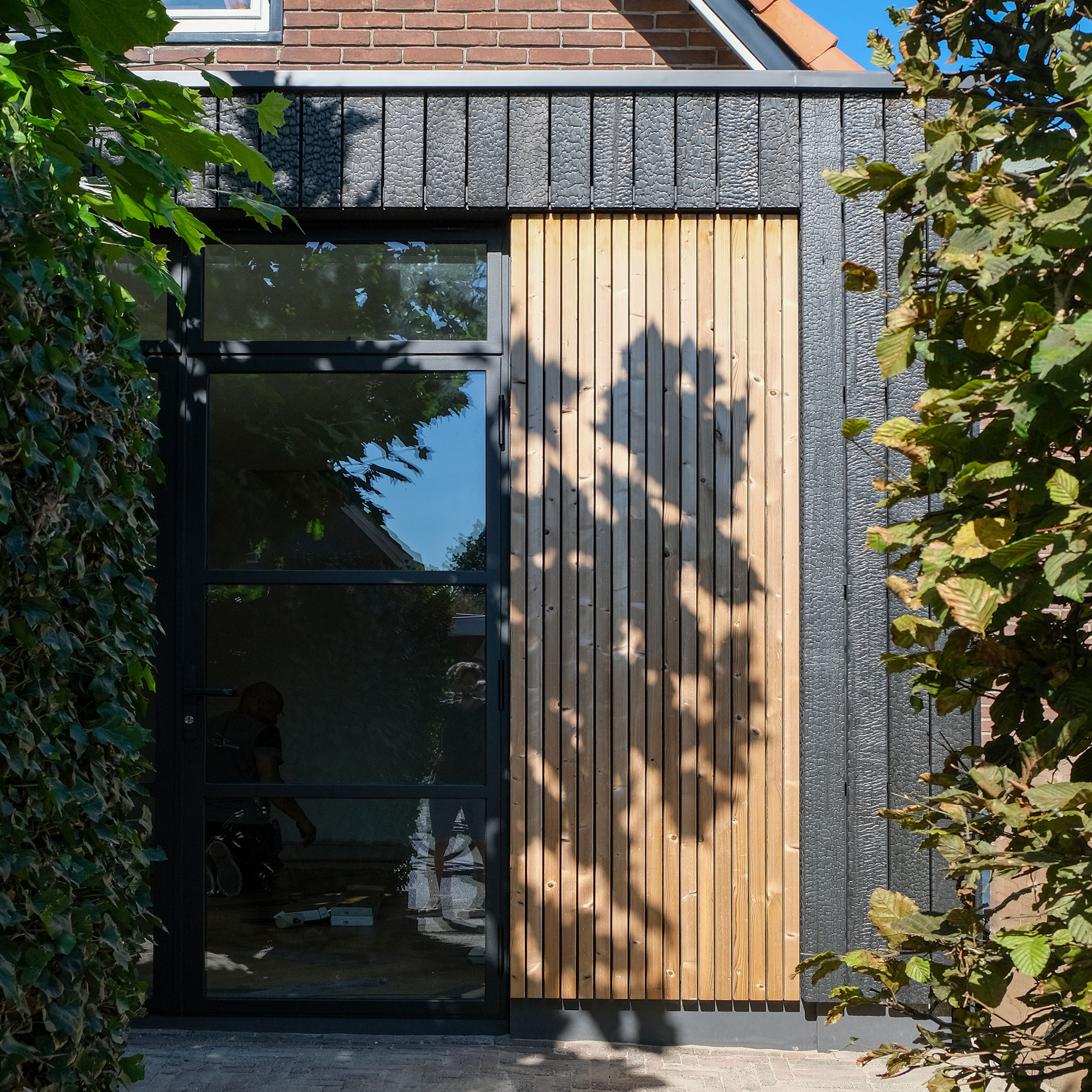
The vertical rhythm aligns with the proportions of the tall glazed openings and accentuates the slenderness of the extension. The dark façade skin acts as a frame for the transparent openings, intensifying the relationship between interior space and garden.
Durable Detailing and Craftsmanship
Omiyama is crafted from hydrothermally modified Fraké (limba). Through the thermal modification process, the wood’s cellular structure is transformed, resulting in enhanced stability and durability. Combined with the deeply charred surface, this creates a weather-resistant and low-maintenance façade solution suitable for long-term exterior applications.
The execution by Zeegers Kleinbouw is defined by meticulous detailing and the precise installation of the vertical elements. Refined junctions around frames and transitions reinforce the monolithic character of the volume, while the natural variation between the boards introduces subtlety and vibrancy.